
When you specify façade glass, you are often pushed toward a false choice: protect people or cut energy loss. In practice, Laminated IGUs let you do both. If you want a supplier that can turn that goal into a practical glazing package, GLASVUE is worth your attention. It serves architects and designers with tailored architectural glass solutions, brings 29 years of industry experience, operates highly automated production, and supports large projects with international certifications. That matters because the best glass partner does more than sell panels. It helps you match interlayers, coatings, cavity design, and processing details to the real demands of your project, so your specification works on site, not just on paper.
Why Safety and Energy Savings Should Work Together
You do not buy architectural glass for a single task. You buy it because a building has many risks at the same time: impact, heat gain, winter heat loss, traffic noise, glare, and long-term comfort. That is why a split solution often creates new compromises instead of solving the real problem.
Modern Risk Profile
A typical façade or window wall must do more than look clean. It may need to hold together after breakage, reduce injury risk, limit UV exposure, cut outside noise, and still keep indoor temperatures stable. In transport hubs, residential towers, hotels, and office façades, these needs show up together, not one by one.
Why Laminated IGUs Beat Split Solutions
If you choose only laminated glass, you gain safety but may leave thermal performance on the table. If you choose only an insulating unit, you improve heat control but may miss the extra protection that an interlayer adds after impact. A combined system answers both concerns in one specification, which is usually what your client actually wants.
Smarter Performance Priorities
Your customer rarely asks for “glass.” They ask for quieter bedrooms, lower HVAC bills, safer overhead glazing, or less glare in occupied spaces. Once you frame the decision that way, the logic becomes simple: select glazing by outcome, then build the package around safety, energy, and comfort together.
How the System Delivers Dual Performance
The strength of the system comes from two parts working together. That is why Laminated IGUs are so effective in real buildings: one part protects people and holds shards in place, while the other part slows heat flow and improves indoor comfort.
Laminated Interlayer Protection
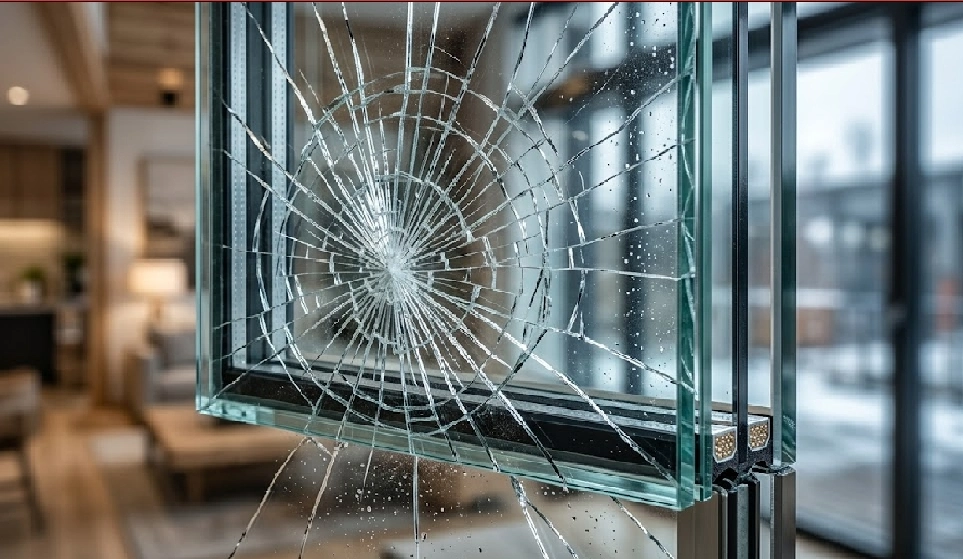
Laminated glass uses one or more interlayers, often PVB or SGP, between glass lites. If the glass breaks, fragments tend to stay bonded to the interlayer instead of falling away. That improves post-breakage safety and can also support better intrusion resistance, UV control, and sound damping, especially in occupied buildings where people are close to the glazing line.
Sealed Thermal Cavity
An insulating unit adds a sealed cavity between lites. That cavity reduces heat transfer, helps control condensation, and can also improve acoustic comfort when the full build-up is designed well. In practical terms, the cavity gives you the thermal layer that single glazing cannot provide, especially where cooling and heating loads matter year-round.
Low-E and Gas Selection
Low-E coatings matter because they reduce radiative heat transfer and reflect a large share of infrared energy while keeping useful daylight. The attached technical material notes that ordinary glass has very high emissivity, while Low-E surfaces are far lower, which is why they are commonly built into insulated units. On the product side, you can also choose single-silver, double-silver, or triple-silver Low-E options and fill the cavity with air or inert gas to tune shading and insulation for your climate and façade orientation.
What You Gain in Daily Use
For you and your client, Laminated IGUs are not just a technical upgrade. They change how the space feels every day. They can reduce sharp temperature swings, soften traffic noise, and add a more forgiving safety response if breakage happens.
Lower Operating Costs
When solar heat gain is controlled and indoor heat is retained more effectively, HVAC systems work less to keep the setpoint stable. That does not mean every project needs the same coating stack. It means your glass should be tuned to the climate, façade exposure, and comfort target, rather than chosen by price alone.
Better Acoustic Comfort
Noise is often the hidden reason clients reject a façade package after occupancy. The technical attachment recommends laminated glass with a PVB interlayer for road-noise control and shows that combining the interlayer with an insulating cavity creates a stronger overall result than treating either layer as a standalone answer. That is especially relevant for street-facing homes, hotels, and office towers near traffic corridors.
Safer Glass Behavior
Safety is not only about preventing breakage. It is also about what happens next. A laminated lite is valuable because it tends to stay in place after cracking, which reduces fallout risk and helps protect people below or nearby. In overhead, balustrade-adjacent, transport, and high-traffic zones, that behavior can be a deciding factor.
Where the Right Product Pair Fits Best
In real specification work, Laminated IGUs make sense when your project has more than one non-negotiable demand. That is where a paired recommendation becomes useful: Professional laminated glass for safety-led performance and Professional Insulated Glass for thermal control, then a combined build when the project needs both.
Safety-Led Areas
For skylights, overhead glazing, balustrade-adjacent zones, transport buildings, and façades with high impact concern, a laminated build should be at the center of the specification. The laminated product line supports deep customization across dimensions, multi-layer structures, and material options, which gives you room to match safety demands without locking yourself into a generic panel.
Energy-Led Facades
For curtain walls, window walls, and large punched openings where HVAC load is the bigger concern, the insulated product line is the natural base. The available options include Low-E substrates, ultra-clear glass, ceramic frit, air or inert-gas cavities, and multiple coating levels, which helps you balance daylight, shading, and insulation instead of over-prioritizing one metric.
Mixed-Performance Envelopes
Most premium projects land here. You need thermal control, but you also need better breakage behavior, UV filtering, and sound comfort. In those cases, a laminated lite inside an insulated build is usually the smarter path. It gives you a cleaner answer to the client’s real concern: “Can this glass keep people safer and the building more efficient at the same time?”
Why Manufacturing Depth Still Matters
A strong specification can still fail if the processor cannot deliver it consistently. That is why it helps to check production capabilities and about the team before you commit a supplier to a demanding package.
Configuration Range
The insulated range is presented with deep customization in size, structure, and substrates, while the laminated range adds multi-layer options and premium materials. That matters when your project needs more than a standard unit size or a basic clear build-up. It also matters when aesthetics, daylight, and code pressure all need to be addressed together.
Process Control
The published capability details show oversized processing up to 3300 × 6000 mm, 85% automation, and IGU lines designed for 90%+ argon filling. Those are not decorative factory claims. They point to repeatability, cavity quality, and better control over large-format architectural units, which is exactly what complex projects need.
Certification Readiness
If you serve international markets, certification is part of the buying decision, not a last-step document request. The company states compliance and testing against standards such as ISO 9001, ASTM E2190, AS 4666, and EN 14449, which supports project teams that need confidence before they issue drawings, mock-ups, or procurement packages.
Start the Specification Conversation Early
If you are specifying Laminated IGUs, the best time to talk to the processor is before the glazing package is frozen. Early discussion saves redesign work and helps you align performance, appearance, and budget sooner.
Product Matching
Start with the use case, not the glass name. Say whether the job is street-facing, coastal, overhead, energy-sensitive, or impact-sensitive. That makes it easier to match the right interlayer, cavity, coating, and substrate instead of forcing one standard build into every opening.
Design Support
If the project includes custom sizes, mixed façades, or performance trade-offs, share drawings early. The contact page explicitly supports drawing uploads, which is useful when you need faster feedback on feasibility, processing limits, and recommended configurations. You can contact the factory here when the scheme moves from concept to specification.
Quote Preparation
A better quote starts with better inputs: glass make-up, dimensions, location, performance goals, and any known code or project constraints. When those details are clear, the supplier can recommend a package that is easier to price, easier to fabricate, and easier to defend to your client. That is how risk drops before production even begins.
In the end, your client is not really asking whether safety matters more than energy savings. They are asking whether the glazing package can solve both problems without creating a new one. That is the real value of Laminated IGUs: they help you specify glass that is safer, quieter, and more energy-aware in one coherent system.
FAQ
Q: Are Laminated IGUs better than standard double glazing?
A: They are better when your project needs more than thermal insulation. A laminated insulating build adds post-breakage safety, better sound damping, and stronger UV control, while still keeping the thermal benefits of an insulated unit.
Q: When should you choose a laminated lite inside an insulating unit?
A: Choose that build when people are close to the glass, noise matters, or the risk of impact and fallout is higher. Common cases include street-facing homes, hotels, transport buildings, skylights, and large façades with higher safety expectations.
Q: What details should you confirm before asking for a quote?
A: Confirm dimensions, glass make-up, coating target, interlayer type, cavity fill, performance goals, and the project environment. If you also provide drawings early, the supplier can usually recommend a more accurate and buildable solution faster.