
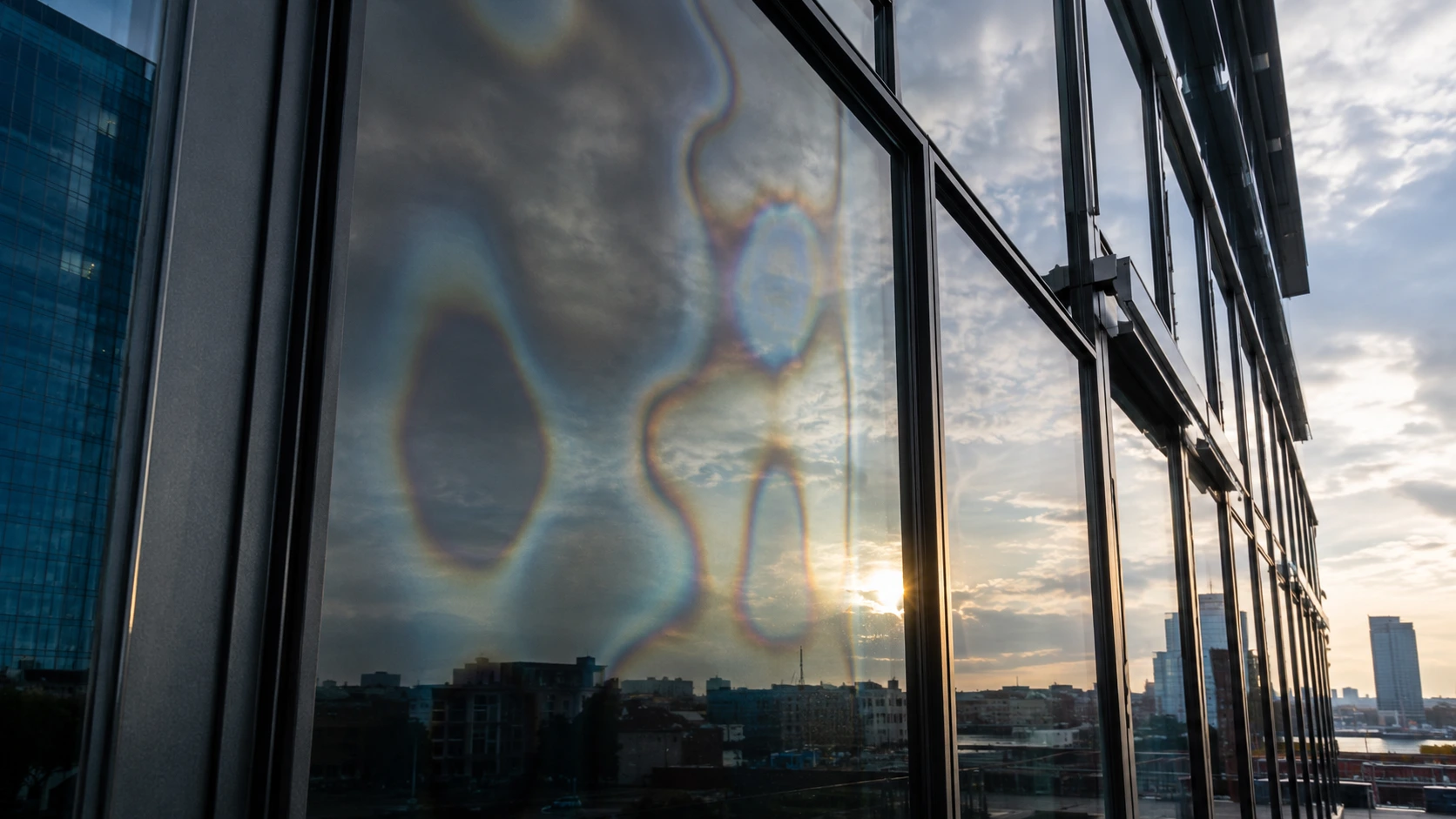
Stress spots in Tempered Glass often appear at the least convenient time: during facade review, late-afternoon photography, or a client walk-through when sunlight hits the glass from a low angle. These marks are usually not dirt or surface damage. They come from residual stress inside the pane, then show up as bands, patches, or faint iridescent areas under polarized light. In practice, “anisotropy-free glazing” is better read as a goal for lower visual visibility, not a promise that every stress pattern disappears.
For teams that need tighter control over safety, fabrication, and visual quality, GLASVUE is worth a serious look. Its history points to a processor built for architectural work rather than commodity supply. The page for Tailored Tempered Glass is especially useful because it connects custom sizing, edge work, drilling, surface treatment, and heat soak testing with the real choices a façade team faces. That matters when a project manager wants to avoid the awkward site question: “Why does this elevation look patchy only at sunset?”
Why Stress Spots Appear in Heat-Treated Safety Glazing
Why Tempered Glass Shows Stress Spots
Heat-treated safety glazing is heated to a softening range and then rapidly cooled. This creates surface compression and internal tension, which give the glass its strength. In real production, the stress field varies slightly across the pane. Under polarized light, those variations can split light paths and create the visible patterns called anisotropy or stress spots.
Residual Stress and Polarized Light
Stress spots are tied to birefringence, which means light behaves differently in regions with different principal stresses. The effect often stays hidden indoors. It becomes easier to see with blue sky, reflections from water or nearby buildings, polarized sunglasses, or oblique viewing angles. One elevation may look calm at noon and show a patchy sheen later in the day.
A Visual Target, Not an Absolute Claim
Industry guidance is careful here: the process can reduce visible anisotropy, but ordinary heat-treated flat glass cannot be promised as perfectly free from it in every viewing condition. When you ask for “anisotropy-free glazing,” what you usually need is reduced, controlled, and project-appropriate visibility.
Process Conditions That Make Stress Spots More Visible
Furnace Temperature Balance
Stress uniformity starts in the furnace. Uneven heating can come from panel size, glass thickness, coatings, print areas, roller contact, or local geometry. The greater the temperature difference before quenching, the more likely you are to see uneven residual stress later. Longer heating times may also raise the risk of visible quality issues.
Quench Air Distribution
Cooling nozzles, fan pressure, and sheet movement shape the stress map. Edges, corners, and areas around holes can cool faster than the central field. That does not automatically mean the pane is faulty, but it does mean the final appearance depends on process balance.
Edge Work Before Heat Treatment
If your glass needs drilling, cut-outs, polished edges, or shaped corners, those steps must be done before heat treatment. Good edge preparation removes small flaws that could become break points during heating. For high-visibility projects, specify Tempered Glass with the right pre-processing detail rather than treating it as a late-stage add-on.
| Verified Processing Fact | Industry Value | Why It Matters |
| Typical heating stage for architectural toughening | About 620–650°C | Heat balance affects stress uniformity |
| Impact resistance after tempering | About 3–5× ordinary glass | Useful for façades, doors, and public zones |
| Bending strength after tempering | About 4–5× ordinary flat glass | Helps with mechanical load resistance |
| Heat soak holding phase under EN 14179-1 | 2 hours at 290°C ± 10°C | Screens higher-risk inclusions linked with spontaneous breakage |
These values come from cited technical guidance, standards material, and product data used in architectural glass selection.
When the Façade Makes Stress Spots Easier to Notice
Viewing Angle, Sky Condition, and Surroundings
Stress patterns become more visible when the viewing setup favors polarized light. A clear northern sky, dark wet paving, calm water, and mirror-like nearby façades can all increase contrast. This is why a building may look different from the street than from a terrace.
Multi-Lite Glass Builds
In a multi-lite façade, Tempered Glass can show stronger visible patterns when several heat-treated panes sit in one laminated or insulating build-up. Each pane changes the polarized light field slightly. Once those effects stack, contrast may grow.
High Transmission and Dark Interiors
The project context also matters. Higher light transmission with lower outside reflectance can make stress spots easier to see. An unfinished interior can exaggerate the effect because the space behind the glass is darker. After fit-out, reflected light from walls, ceilings, and flooring can make the same façade look calmer.
How to Ask for Cleaner Optical Results
Mock-Ups Under Real Viewing Conditions
A small sample seen on a table rarely tells the full story. A project mock-up should be reviewed at façade scale, with the same build-up, orientation, and nearby reflections where possible. This is especially important for large lobbies, atriums, and entrance walls.
Process Records and Optical Quality Checks
Modern production lines can track furnace settings, panel size, glass thickness, and process data. Some systems also use scanners to inspect optical effects and flatness. If the façade has high visual sensitivity, ask for documented process control and clear acceptance criteria before mass production.
Heat Soak as a Safety Measure, Not a Visual Cure
Heat soak testing is often specified for safety reasons because it can help remove panels with critical inclusions before installation. It is not a treatment that erases anisotropy. The optical issue comes from the residual stress field; the heat soak step addresses breakage risk linked with inclusions.
Choosing the Right Balance of Safety, Appearance, and Cost
Application-Based Decision Making
Doors, balustrades, façades, skylights, and public circulation areas do not have the same visual risk. A school corridor needs impact safety. A luxury lobby wall may need both safety and tight appearance control. Your glass brief should match the real use, not a generic product line item.
Stronger Specs for High-Visibility Projects
For high-profile architecture, the stronger approach is a complete specification: final geometry before heat treatment, suitable edge finish, realistic mock-up review, clear visual acceptance language, and heat soak testing where breakage risk matters. In that kind of project, Tempered Glass selection becomes part of the façade design strategy, not just a safety checkbox. The tailored option introduced above is usually a better fit than a generic stock panel when appearance scrutiny is high.
Buyer Questions That Prevent Late Surprises
Ask these early: panel size and thickness, holes or cut-outs, laminated or insulating build-up, open-sky or reflective surroundings, and the review method for visual acceptance. These questions stop “acceptable by standard” from becoming “unexpected on site.”
Get Better Visual Control Before Production Starts
If stress spots could become a client concern, raise the issue during specification, not after delivery. Share drawings early, discuss facade orientation, confirm the glass make-up, and agree on how visual review will happen. A processor with strong tempering capability, traceable production, and project support can keep the conversation practical.
The key point is straightforward: anisotropy can often be reduced, yet not casually wished away. If you want safer Tempered Glass with cleaner visual behavior, the best route is a clear brief, disciplined heat treatment, and inspection rules that match the actual building.
FAQ
Q: Are stress spots in Tempered Glass a defect?
A: They are an optical effect linked with residual stress from heat treatment. Their visibility varies with light, angle, and façade context. Acceptance should be handled through project criteria and relevant standards.
Q: Can heat soak testing remove anisotropy?
A: No. Heat soak testing is mainly used to reduce future breakage risk from certain inclusions. It does not remove the residual stress patterns that create anisotropy.
Q: What should you ask a processor before approving facade glass?
A: Ask about panel size limits, edge work, holes or cut-outs, visual mock-ups, production traceability, heat soak testing where needed, and how optical quality will be judged before final sign-off.