
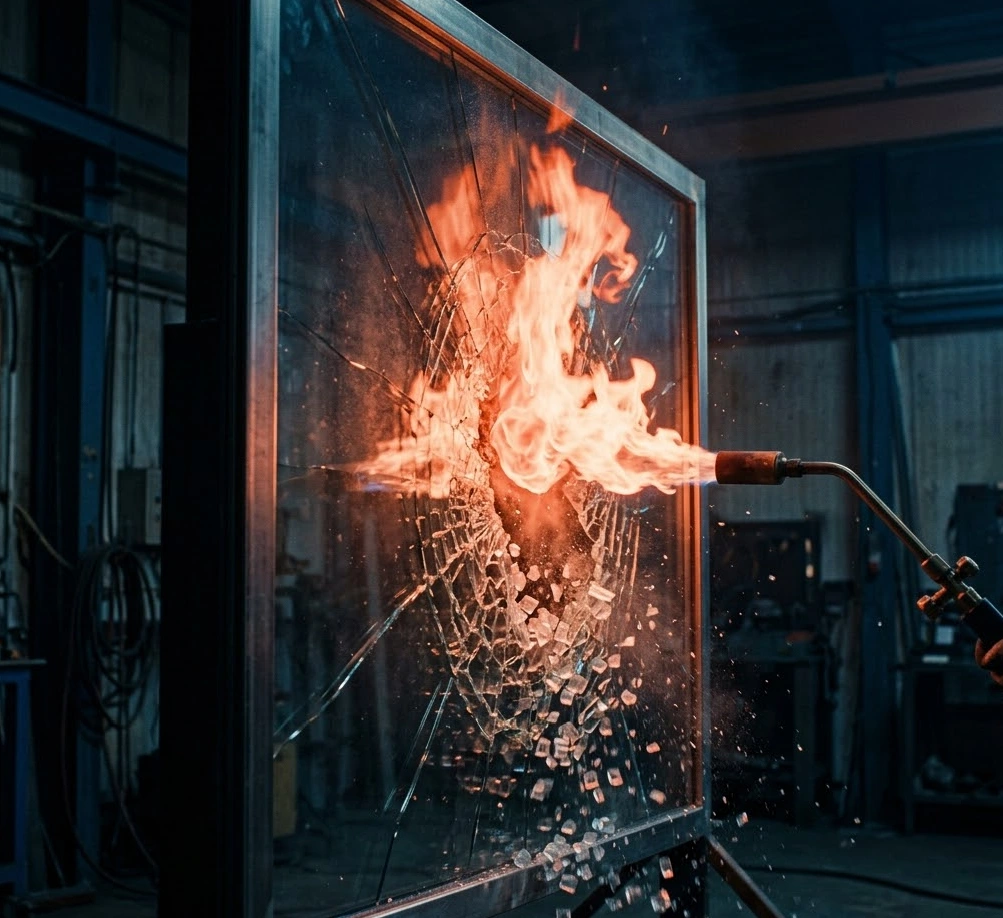
Many architectural applications call for stronger and safer glass. Tempered Glass is by far the most common glass type chosen for such needs. In door, partition, facade and shopfront applications many buyers still misunderstand Tempered Glass with fire-rated glass. They are often fooled by other trade names for Tempered Glass such as heat treated glass, safety glass or toughened glass.
GLASVUE works with architects, designers, window fabricators, and curtain wall contractors who need custom architectural glass that looks clean and performs well on site. The company focuses on practical project needs, from drawing review to cutting, edging, drilling, coating, tempering, laminating, and insulating glass combinations. If your project needs high strength, neat edges, drilled holes, surface treatment, or heat soak testing, Tailored Tempered Glass is a strong choice. For large or unusual panels, you can also check GLASVUE’s production capabilities before finalizing your design.
What Tempered Glass Can and Cannot Do in a Fire
Heat Resistance Boundaries
Standard tempered safety glass is made by heating glass to about 650°C and then cooling it quickly with air. This treatment creates surface compression and inner tension, making the glass much stronger than ordinary annealed glass.
That does not mean the glass becomes fire-rated. In a real building fire, glass faces flame, smoke, radiant heat, frame movement, and sudden temperature changes. A standard safety glass panel may resist daily heat stress better, but it is not designed to hold back fire for a tested period such as 30, 60, or 90 minutes.
Thermal Shock Risk
Fire rarely heats a panel evenly. One corner may face flame while another stays cooler near a metal frame. Then water from firefighting can hit the hot surface. This fast change can break glass, including toughened safety glass.
This is why a balcony guardrail, interior door, or glass partition can use GLASVUE custom safety glass for strength and safer breakage, while a rated stairwell or protected corridor needs a separate fire-rated system.
Safe Breakage Pattern
When standard annealed glass breaks, it can form long sharp pieces. Toughened glass breaks into small blunt particles, lowering the risk of deep cuts. That is one of its biggest values in human contact zones.
| Property | Ordinary Annealed Glass | Tempered Glass | Practical Meaning |
| Impact Resistance | Baseline | About 3 to 5 Times Higher | Better for doors, partitions, and public areas |
| Bending Strength | Baseline | About 4 to 5 Times Higher | Better under wind load and daily use |
| Breakage Form | Sharp Shards | Small Blunt Particles | Lower injury risk after breakage |
| Heat Treatment | No Special Stress Treatment | Around 650°C Heating and Rapid Cooling | Better thermal stability, not a fire rating |
Small detail from real projects: the hole position for a handle or hinge often matters as much as the glass thickness. If the drilling is wrong by even a few millimeters, the whole panel may become unusable on site.
Common Myths About Fire Safety Glass
Fireproof Glass Claims
One common myth is simple: if glass is toughened, it is fireproof. That is not correct. Toughened safety glass has better strength and thermal shock resistance, but a fire-rated product must pass specific fire tests as part of a full system.
The glass, frame, sealant, gasket, and installation method all matter. A strong glass panel placed inside the wrong frame will not perform as a rated assembly.
One Glass for Every Safety Need
No single glass type solves every problem. For impact safety, toughened glass is often suitable. For post-breakage holding, laminated glass is better because the interlayer holds fragments together. For thermal comfort, insulated or Low-E glass is usually needed. For fire control, a tested fire-rated glass system must be selected.
GLASVUE can help you decide whether your glass should be toughened alone or combined with laminated, insulated, Low-E, printed, or coated glass.
Label and Certification Limits
A stamp or label showing toughened safety glass is useful, but it does not replace a fire report. If your project involves exit routes, fire doors, facade spandrel zones, or protected openings, ask for the exact performance requirement before ordering.
This step saves time. It also avoids a painful site problem: glass that is beautifully made but rejected during inspection.
Fire-Rated Glass, Safety Glass, and Building Codes
Fire-Protective Glass
Fire-protective glass is mainly used to limit flame and smoke spread for a tested time. It still needs the correct framing and edge system. You should treat it as a tested assembly, not as a single loose panel.
Fire-Resistive Glass
Fire-resistive glass goes further. It can help limit heat transfer as well as flame and smoke, depending on the tested system. It is often used where a transparent wall must act closer to a fire barrier.
This is where specification must be very clear. Do not replace fire-resistive glass with standard safety glass because the surface looks similar.
Laminated Safety Glass
Laminated glass has a different role. These types of interlayers hold broken glass fragments together to deliver additional safety, thereby greatly reducing the risk of injury or accident and ensuring building security. Laminated interlayer combinations can often be more suitable for higher rise window applications, building canopies, stairway railings and very busy public areas where a single toughened glass panel alone may not be sufficient.
Architectural Applications Where Safety Glass Still Matters
Doors and Interior Partitions
For office partitions, glass doors, shower screens, retail fronts, and hotel interiors, impact safety is often the main concern. These areas need clean edges, accurate holes, stable dimensions, and a safer breakage pattern.
This is where GLASVUE Tailored safety glass fits well. You can request custom sizing, edge processing, drilling, cutouts, surface treatments, and heat soak testing before shipment.
Facade and Curtain Wall Panels
As facade glass is exposed to wind load, thermal stress, solar exposure and long-term service life demands, it has to meet several criteria, particularly when it is supplied in larger format. The glass must have a sufficient flatness, be processed correctly and have a constant quality even for larger batches. Our company GLASVUE is able to process several processing steps for large-size architectural glass up to a maximum size of 6000mm x 3300mm to meet your large-scale facade design with bigger panels and less breaks.
| GLASVUE Processing Item | Maximum Size | Thickness Range or Key Data |
| Cutting | 6000mm × 3300mm | 4mm to 25mm |
| Edging | 6000mm × 3300mm | 4mm to 25mm |
| Fully Tempered Glass | 6000mm × 3300mm | 4mm to 25mm |
| Heat Soak Test | 6000mm × 3300mm | 4mm to 25mm |
| Insulating Glass | 6000mm × 3300mm | 90%+ Argon Filling Rate Available |
Near-Heat and High-Traffic Zones
Areas near sunlight, kitchen zones, warm equipment, or busy walkways need careful glass choice. Toughened glass can deal with impact and temperature changes better than ordinary glass, but the fire requirement must still be checked separately.
For example, a restaurant glass partition near a kitchen entrance may need impact-safe glass. A rated kitchen enclosure may need a fire-tested assembly. The drawing may look similar, but the specification is not.
Specification Checklist for Safer Selection
Code Requirement Review
Start with the code requirement, not the glass name. Ask whether the area needs impact safety, fall protection, thermal insulation, acoustic control, smoke control, or tested fire resistance.
Once this is clear, the glass type becomes easier to choose. You avoid paying for features you do not need and avoid missing features that the inspector will check.
Size and Processing Accuracy
Toughened safety glass cannot be cut or drilled after tempering. Every hole, notch, corner radius, hinge position, and edge finish should be confirmed before production.
GLASVUE’s technical team can review drawings, which is useful when the panel has hardware holes, oversize dimensions, or visible polished edges. For contractors, that drawing check can prevent replacement panels and delayed installation.
Heat Soak Testing
Heat soak testing is often requested for high-rise facades, large glass areas, and public projects. It helps reduce the risk of spontaneous breakage caused by hidden internal stress.
It does not make glass fire-rated, and it should not be sold that way. Its role is quality risk reduction, especially when panels are large, expensive, or difficult to replace after installation.
Choose GLASVUE for Safer Architectural Projects
Custom Quote Support
If you need Tempered Glass for doors, partitions, railings, windows, or facade panels, send your drawing, size, thickness, hole layout, edge finish, quantity, and application notes to contact GLASVUE. A clearer drawing usually means a cleaner quotation.
Free Sample Review
Before a bulk order, a sample can help you check edge quality, glass color, printed pattern, coating effect, hole accuracy, and packaging details. This is especially useful when the glass is visible at eye level.
Project Specification Guidance
GLASVUE’s about GLASVUE page shows the company’s focus on architectural glass, automation, certifications, and custom project service. For your project, the main point is simple: use the right glass for the right safety target. Choose GLASVUE Tempered Glass when you need strength, safer breakage, custom processing, and a reliable architectural finish. Choose a tested fire-rated system when the code calls for fire resistance.
FAQ
Q: Is Tempered Glass fire resistant enough for fire doors?
A: No. It can resist daily heat stress better than ordinary glass, but fire doors need tested fire-rated glass and matching frames.
Q: Can GLASVUE make custom holes, edges, and sizes before toughening?
A: Yes. GLASVUE can provide custom sizing, edge processing, drilling, cutouts, surface treatments, and heat soak testing before final shipment.
Q: When should you choose laminated or insulated glass instead?
A: When you need the broken glass to stick together with the interlayer layer, use laminated glass. To improve thermal comfort, sound insulation and to prevent condensation, use insulated glass.