
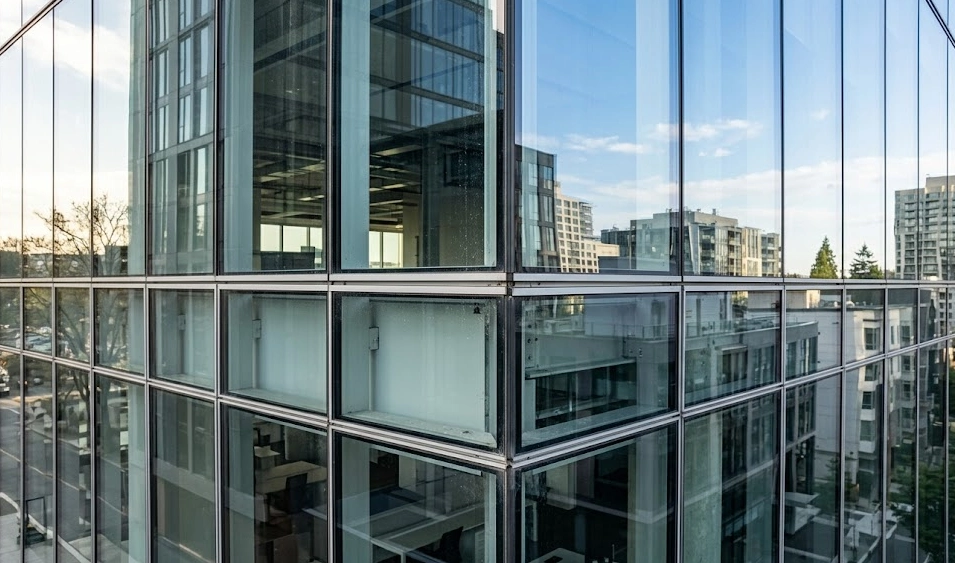
Choosing Glazing for Energy-Efficient Buildings is not only a matter of appearance. It affects cooling loads, winter comfort, daylight quality, glare, and how people actually feel near the glass. In many projects, the decision comes down to two coated glass paths: Low-E glass and reflective glass. They may look similar in a product list, yet they solve different building problems.
The reason GLASVUE stands out is that it treats architectural glass as a project decision, not a catalog shortcut. Its production capabilities show large-format processing, high automation, and support for complex façade needs. Its company background reflects a clear focus on architectural glass systems, while the contact team gives designers and buyers a direct path for project discussion. That matters because Glazing for Energy-Efficient Buildings works best when the coating choice, glass build-up, climate, and façade direction are considered together.
Low-E and Reflective Glass Solve Different Energy Problems
Before comparing price, color, or appearance, you need to define the job the glass must do. One type is stronger at reducing heat transfer through the glazing system. The other is stronger at controlling harsh solar radiation and reflected daylight from the façade.
Thermal Retention and Solar Control
Low-E glass is designed to reduce radiant heat transfer. Its coating reflects infrared heat while allowing useful daylight to pass. In practical terms, it helps keep indoor warmth from escaping in cold periods and limits unwanted heat movement in warmer periods. This is why Low-E glass is often the better starting point when you need year-round thermal performance.
Reflective glass works differently. Its film system reflects more solar radiation and creates a stronger exterior visual effect. Performance Reflective Glass is especially useful when a façade receives intense sun, when glare control is a priority, or when the design calls for a more pronounced reflective appearance.
Daylight, Glare, and Façade Appearance
If you want a bright interior with better thermal balance, Low-E glass usually gives a more natural daylight result. Technical reference material in the attachments notes that Low-E glass can maintain high visible light transmission while keeping visible reflectance lower than traditional reflective coatings.
Reflective glass creates a different design language. It can reduce the intensity of incoming sunlight and bring a stronger mirror-like façade effect. That may fit office towers, west-facing curtain walls, or urban commercial buildings where solar glare would otherwise be tiring by mid-afternoon.
Seasonal Performance Differences
One subtle point often gets missed: reflective glass mainly helps when solar radiation is present. Its strongest value appears during sunny daytime conditions, especially in cooling-led climates. Low-E glass brings value across more conditions because heat transfer does not stop after sunset or during winter. That distinction matters when you are specifying Glazing for Energy-Efficient Buildings for mixed climates or buildings used all day.
The Metrics That Matter Before You Choose
A good glass selection does not begin with “clear, gray, or blue.” It begins with measurable performance. Three values matter most for early decisions: U-factor, SHGC, and visible transmittance.
U-Factor, SHGC, and Visible Transmittance
U-factor shows how quickly non-solar heat moves through a window or glazing system. Lower is better for insulation. SHGC shows how much solar heat enters through the glass. Lower SHGC means stronger solar heat control. Visible transmittance tells you how much daylight passes through. The best choice depends on your climate, orientation, and use of the space.
| Performance Item | Industry Reference | What It Means for Your Choice |
| Residential heating and cooling energy affected by windows | 25%–30% | Glazing has a direct impact on energy bills |
| Energy loss reduction from Low-E coatings | Up to 30%–50% | Low-E glass is highly relevant for thermal control |
| Typical window U-factor range | 0.20–1.20 | Lower values indicate better insulation |
| SHGC range | 0–1 | Lower values reduce solar heat gain |
These figures come from current U.S. Department of Energy and NFRC guidance, and they explain why glass choice deserves attention early in the design process.
Choosing Glazing for Energy-Efficient Buildings by Climate
In a cold region, you may want glass that keeps indoor heat from escaping while still allowing useful winter sun. In hot regions, you may place more weight on limiting solar heat gain. That is why a high-light-transmittance Low-E option may suit one building, while a stronger solar-control coating may be better for another.
The attachments also note that Low-E shading values can be selected differently for hot and cold regions, which aligns with the product guidance on choosing higher or lower solar control based on climate.
Coating Position and Glass Build-Up
For insulating glass units, coating position is not a small detail. The uploaded technical material explains that changing the Low-E coating surface can alter solar control even when insulation performance remains close. In many façade and window systems, coating placement inside the cavity helps protect the film and keeps the glass system working as intended.
This is also why the glass build-up matters. A coated pane, air or gas cavity, laminated layer, and sealant design all influence final performance. One coating alone rarely tells the full story.
When Low-E Glass Is the Better Choice
Low-E glass often fits projects where you want broad energy performance without giving up too much daylight. It is not limited to one building type. It can work across homes, hotels, schools, transport buildings, and offices.
Year-Round Thermal Comfort
If your priority is steady indoor comfort through both heating and cooling seasons, Low-E glass is usually the stronger choice. It addresses radiant heat exchange, which helps reduce unwanted heat movement across the glass. For Glazing for Energy-Efficient Buildings, that broad seasonal effect is a major advantage.
Bright Interiors With Better Heat Control
A common concern is that better energy performance will make interiors darker. Low-E glass gives you more flexibility here. You can specify higher, medium, or lower light transmission depending on the façade direction and use of the room. This makes it suitable for spaces where daylight remains part of the architectural intent.
A small but real jobsite lesson: buildings often lose daylight quality not because the designer ignored daylight, but because glare was handled too late. The better approach is to set the solar-control target earlier, then choose the Low-E light level around it.
Multi-Need Public and Commercial Spaces
The attachments describe a transit-building application where laminated insulating Low-E glass helped combine light comfort, thermal control, noise reduction, and safety. That is a useful real-world example. Large public façades rarely have only one requirement. They need glass systems that solve several issues at once, not one by one.
When Reflective Glass Is the Better Choice
Reflective glass is more specialized, but in the right place it can be exactly what the façade needs. It becomes especially valuable when solar intensity, visual screening, and exterior appearance rank high.
Strong Sunlight and Glare Reduction
West-facing offices, large commercial façades, and exposed urban elevations can receive severe solar loads. Reflective coatings are designed to send back more solar radiation, which can help manage glare and reduce the visual harshness of strong sun.
Distinct Exterior Color and Daytime Privacy
Reflective glass changes the character of a façade. It can deliver deeper tones, a more uniform exterior look, and stronger daytime screening. The uploaded materials specifically note that reflective glass can create a daytime one-way visual effect, which is one reason it appears so often in commercial architecture.
Cooling-Led Buildings in Sunny Locations
If your building faces a cooling-heavy climate and receives strong direct sun, reflective glass may be the practical route. It is especially suitable when solar control and façade identity matter more than maximum daylight transmission. Yet it is worth remembering that reflective glass does not automatically replace the winter insulation role of Low-E glazing. The two serve different priorities.
Matching Glass Type to the Project Brief
The right choice becomes easier when you match the glass to the actual building problem. Do not start with the coating name. Start with the façade condition.
A Practical Selection Table
| Project Need | Better Starting Point | Reason |
| All-season insulation with daylight | Low-E glass | Controls heat transfer while maintaining useful light |
| Strong afternoon sun and glare | Performance Reflective Glass | Reflects more solar radiation and supports façade shading goals |
| Cold-region residential windows | Higher-transmittance Low-E glass | Supports daylight and winter comfort |
| Commercial curtain wall with visual impact | Performance Reflective Glass | Adds solar control and a stronger exterior finish |
| Public building needing comfort, safety, and acoustic value | Low-E insulating laminated build-up | Works well as part of a multi-layer performance system |
This kind of matrix helps turn Glazing for Energy-Efficient Buildings from a vague sustainability goal into a clearer specification path.
Orientation, Window Area, and Use of Space
A north-facing window and a west-facing curtain wall should not be treated the same. Large glass areas increase the effect of both heat gain and heat loss. Spaces with long afternoon occupancy may need more glare control. Hotel rooms, classrooms, offices, and atriums also respond differently to the same pane of glass.
The Value of Mixed Glazing Strategies
One building may benefit from more than one glass solution. A project can use Low-E glass on façades where thermal balance and daylight lead the brief, then use reflective glass on harsh sun-facing elevations. That mixed approach is often more sensible than forcing one coating type across the whole envelope.
Build the Facade Around Performance, Not Habit
A strong glazing decision begins with three questions: What climate are you designing for? Which façades take the hardest sun? What does the interior need to feel like at peak use?
If you need to control temperature in a broad sense and at the same time to have clear daylight in all seasons and comfortable temperature throughout the year then Low-E glass is definitely the best option. On the other hand, if the facade is going to be exposed to high amounts of solar radiation and at the same time you need to reduce glare and have a more reflective look for architectural reasons then probably reflective glass is a better option for you. Glazing for Energy-Efficient Buildings works best when the chosen products follow the requirements.
FAQ
Q: Which option is better for Glazing for Energy-Efficient Buildings, Low-E or reflective glass?
A: It depends on the building goal. Low-E glass is often better for year-round thermal performance and balanced daylight. Reflective glass is often better for strong solar exposure, glare reduction, and a more pronounced façade appearance.
Q: Can Low-E glass reduce energy loss without making interiors too dark?
A: Yes. Low-E glass is available in different light-transmission levels. You can select a version that supports daylight while still improving thermal control.
Q: Is reflective glass enough for energy-efficient façades?
A: Reflective glass can help reduce solar heat gain in sunny conditions, but it does not always offer the same broad insulation value as Low-E glazing. For many projects, the better answer is to match the glass type to climate, orientation, and use of space.