
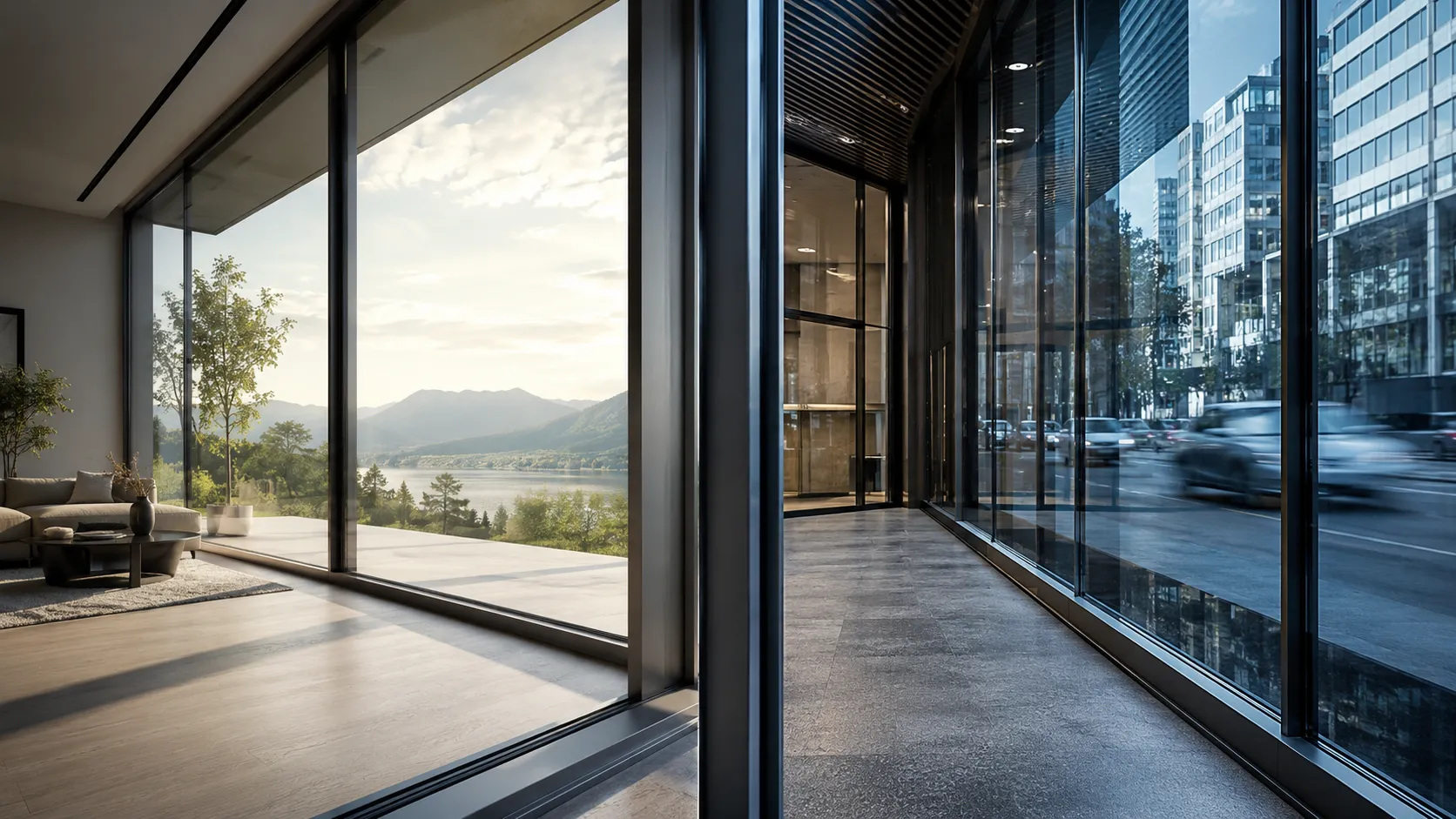
Choosing between Insulated Glass and laminated glass is no longer a narrow material decision. In your projects as architect, contractor or even as a buyer of glass. Simple product information does not help 2026 your work will include monitoring energy use, interior comfort, impact safety and traffic noise in in such situations – one needs support with a project. This is exactly what GLASVUE is – especially from abroad – an ideal business partner for the realization of residential and commercial offer: They deal with architectural glass. They can process glass in every desired way, such as hotels as well as public buildings.
The real question is not which glass is “better” in every case. The better question is which one fits your brief. If your main concern is heat transfer and air-conditioning load, insulated units usually lead. If breakage safety, shard retention, and stronger acoustic damping matter more, laminated structures may be the better starting point. In many 2026 projects, a combined build-up delivers the most balanced answer.
Why This Comparison Matters in 2026 Building Design
Glass now carries a heavier job than it did a decade ago. You still expect daylight and visibility, but you also expect the glazing to support comfort, building performance, and safer use of space. That is why this comparison matters before specification begins.
Energy-Efficient Building Priorities
Energy performance remains a major selection factor. The U.S. Department of Energy states that heat gain and heat loss through windows account for 25% to 30% of residential heating and cooling energy use. For projects with large window areas, even a moderate change in glazing performance can influence HVAC demand and indoor comfort.
Urban Safety and Impact Concerns
Safety requirements become more visible in schools, retail entrances, overhead glazing, and high-traffic buildings. Laminated glass keeps fragments bonded to the interlayer after breakage, which reduces scatter and lowers secondary injury risk. The technical reference materials provided for this brief also point to its value in building façades, doors, skylights, and other impact-sensitive positions.
Noise-Control Demands in Dense Cities
Noise is not a small comfort issue anymore. Projects near roads, rail links, mixed-use streets, and transport hubs often need glazing that reduces more than casual outdoor sound. Hollow cavities help control higher-frequency noise, while laminated interlayers are stronger at damping vibration and improving performance against lower-frequency urban noise.
Core Differences Between the Two Glass Types
Before you compare performance, it helps to separate the two structures. They solve different problems through different physical designs.
Multi-Pane Thermal Structure
An insulated unit uses two or more panes separated by a sealed cavity. The cavity may contain dry air or gases such as argon. The structure slows heat transfer and also helps reduce condensation risk when properly designed and sealed. Product customization may include pane thickness, cavity width, coatings, and gas type.
Interlayer-Based Safety Structure
Laminated glass uses two or more panes bonded with an interlayer such as PVB, SGP, or EVA. The interlayer holds broken fragments in place and can also support acoustic damping or UV filtering, depending on the specification. This makes it suitable for applications where glass breakage behavior matters as much as appearance.
Performance Goals and Design Priorities
The difference is practical. One structure focuses first on thermal performance. The other focuses first on post-breakage safety and acoustic control. If you try to compare them by only one number, the result can be misleading. A better comparison starts with the project target, then checks whether a hybrid build-up is justified.
Energy Efficiency, Safety, and Noise-Control Performance Compared
This is where material choice becomes clearer. Each glass type may contribute to all three goals, but not with the same strength.
Insulated Glass for Thermal Control
For heat transfer, Insulated Glass is usually the more direct answer. The sealed cavity slows conduction, and Low-E coatings or gas fills can further improve thermal behavior. The supplied technical material lists common reference values that show the direction clearly.
| Glass Build-Up | Typical Thermal Benchmark | Acoustic Reference |
| 6 mm Single Pane Clear Glass | U-value about 5.8–6.0 W/m²·K | About 31 dB |
| 6+12+6 Standard Insulating Unit | U-value about 2.9–3.1 W/m²·K | About 35 dB |
| Argon-Filled Insulating Unit | U-value about 2.5 W/m²·K | Better performance in selected frequency bands |
These figures vary with coatings, cavity width, testing method, and exact configuration, but the direction is consistent: insulated assemblies reduce heat transfer far more effectively than single glazing.
Breakage Safety and Impact Resistance
Laminated structures stand out when you care about what happens after impact. Even when broken, the glass remains attached to the interlayer instead of falling into sharp, loose fragments. This makes laminated glazing common in areas that need stronger occupant protection, including railings, entrances, overhead glazing, and public-facing walls.
Traffic Noise and Indoor Acoustic Comfort
Noise control depends on frequency, not just thickness. technical reference identifies standard hollow Units perform adequately against higher frequency sounds but are not as effective against low frequencyThis noise, i.e. heavy traffic rumble. Laminated glass – especially with acoustic interlayers
Which Glass Fits Different 2026 Building Applications
Once the performance differences are clear, the application logic becomes much easier.
Residential Windows and Energy-Saving Facades
For homes, apartments, and office façades, Insulated Glass is often the first product to review because the comfort gain is visible in daily use. It helps reduce seasonal heat exchange, supports lower condensation risk, and works well with Low-E coating strategies. For projects that need tailored cavity width, gas fill, and pane choices, Professional Insulated Glass is a practical option to evaluate early.
Schools, Storefronts, and High-Traffic Zones
Safety-centered projects point in another direction. Schools, retail façades, corridors, entrance walls, and public buildings benefit from glazing that stays together after impact. If your project places breakage behavior, acoustic comfort, and UV control high on the list, Professional laminated glass fits that need more naturally.
Hotels, Transit Hubs, and Mixed-Performance Projects
Some projects do not allow a simple either-or choice. A hotel beside a busy road may need thermal comfort, acoustic control, and safer breakage behavior at once. A transit hub may need large-area façades with better noise control and stronger occupant protection. In these cases, laminated insulating units or other mixed glass systems are often more useful than forcing one material to do every job alone.
| Main Requirement | Better Starting Choice | Why It Fits | Common Upgrade Path |
| Lower Heat Transfer | Insulated Unit | Sealed cavity reduces conductive heat flow | Low-E coating, argon fill |
| Safer Breakage Behavior | Laminated Unit | Interlayer holds shards together | Toughened laminated build-up |
| Urban Noise Reduction | Laminated Unit | Interlayer dampens vibration | Laminated insulating combination |
| Balanced Multi-Performance | Combined System | Covers comfort, safety, and sound | Project-specific composite design |
Why These Product Lines Match 2026 Specification Trends
The right product is only part of the decision. You also need stable production, clear customization paths, and a supplier that can work from actual project requirements.
Custom Thermal and Acoustic Configuration
The supplier’s company profile presents a deep-processing focus built around architectural glass, not generic stock sheets. This matters when you need the right mix of transparency, solar control, thermal performance, interlayer choice, and visual finish for a specific project type.
Advanced Processing Capacity for Custom Projects
Its production capabilities page describes an 85% automation rate, insulating glass processing up to 3300 × 6000 mm, and an insulating line able to achieve 90%+ argon gas filling. For buyers, these are not decorative claims. They affect repeatability, project scale, and confidence in specification matching.
Specification Support for Project Buyers
You may be sourcing glass for a façade contractor, a door and window factory, or a multi-site commercial roll-out. In each case, you need more than a product picture. You need build-up advice, processing confirmation, and communication that stays clear from inquiry to quotation. That is why customization support should remain part of your selection criteria.
Contact the Team for the Right Glass Solution
The choice becomes easier when you define the priority first. Thermal comfort, safety after impact, and urban noise control do not always point to the same structure. Your project should drive the material choice.
Project-Based Product Selection
If your brief starts with energy targets, Insulated Glass should be reviewed early. If your project has more demanding safety or sound concerns, laminated structures deserve stronger attention. If the building asks for all three, a combined solution is usually the more mature route.
Custom Service for Architects and Buyers
A strong sourcing partner should be able to discuss drawings, pane build-ups, coatings, interlayers, sizes, and target use cases without turning every conversation into generic sales language. That kind of project dialogue saves time later, especially on export orders and large-format jobs.
Contact for Product Consultation
For specification questions, custom quotations, or product matching, you can reach the contact team. A clear project brief will help narrow the choice faster and reduce revisions during quotation.
In 2026, Insulated Glass is often the stronger starting point for energy-led projects, while laminated glass remains the better fit for safety-led and sound-sensitive applications. The most capable buildings, though, rarely rely on a single performance idea. They use the right glass system for the actual risk, comfort target, and project environment.
FAQ
Q: When should I choose Insulated Glass?
A: Choose it when thermal comfort, lower heat transfer, condensation control, and energy performance are the main goals. It is especially useful for façades, windows, and buildings with large glazed areas.
Q: Is laminated glass always better for sound control?
A: It is often better for damping low- and mid-frequency urban noise because the interlayer reduces vibration. For stronger overall sound control, laminated insulating combinations may be more suitable.
Q: Can one project use both glass types together?
A: Yes. Mixed systems are common when a building needs thermal performance, occupant safety, and better indoor acoustic comfort at the same time. Hotels, transport buildings, and high-end residential façades often benefit from that approach.