
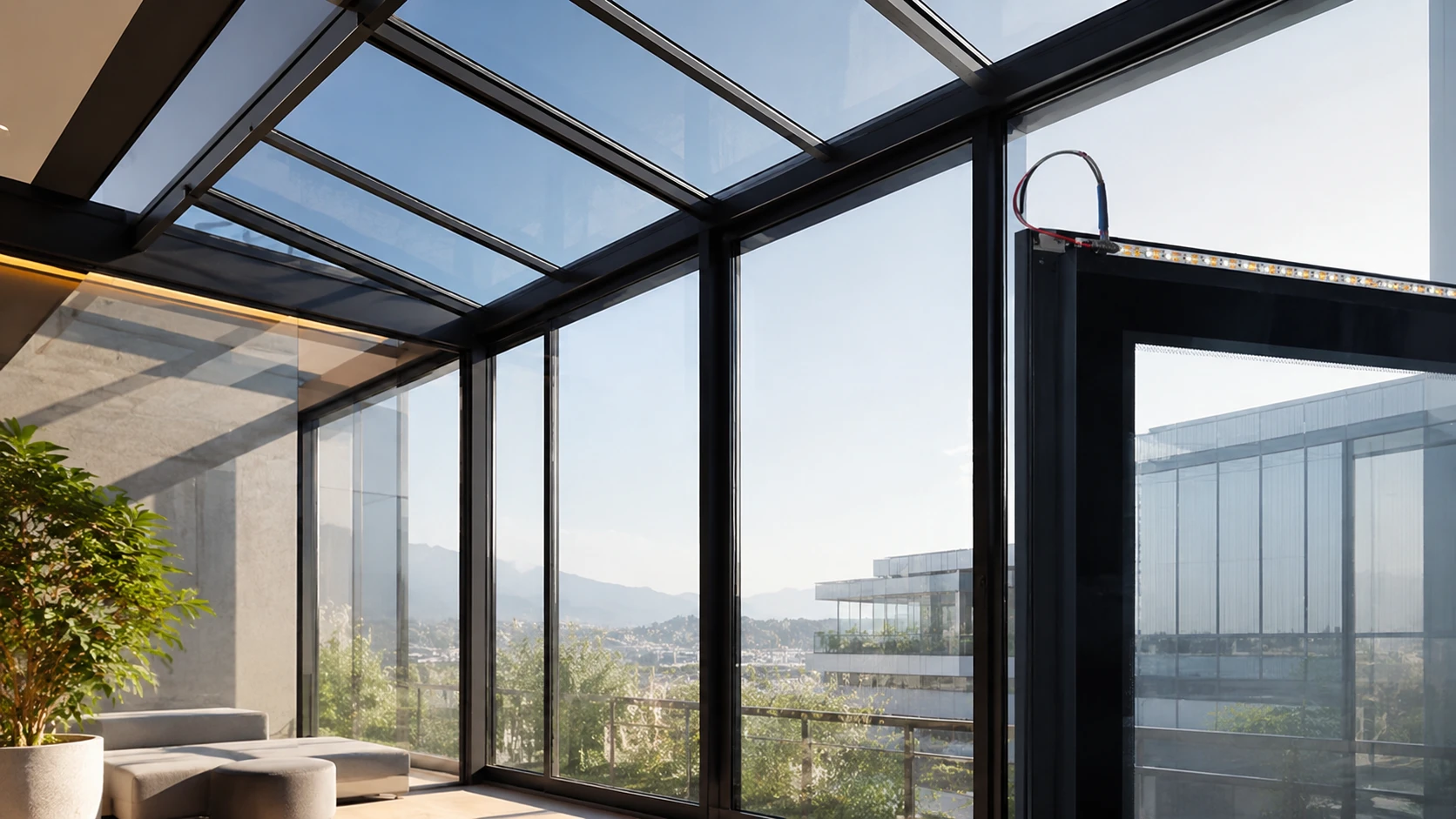
Perovskite PV Glass enables the conversion of windows, fronts, balcony barriers, roof lights, and ceiling panels into useful energy zones. This occurs without sacrificing the natural glow that modern designs typically provide. Transmittance plays the central role. It measures the amount of visible light that travels through the material. When selected properly, such glass keeps interiors airy, luminous, and welcoming. At the same time, it creates sustainable electricity.
For those seeking a reliable glass supplier that goes past basic panels, GLASVUE provides a straightforward path from initial ideas to full implementation. Plans can be sent via the contact page. In cases requiring both energy production and clear sightlines, Perovskite PV Glass stands as the preferred choice.
Why Transmittance Matters in Solar Glass
Daylight Comfort
People install glass mainly to bring in natural illumination. Such brightness makes spaces seem wider, more peaceful, and higher in worth. In residences, daylight aids relaxation and routine tasks. Offices benefit from better sight conditions, which cut reliance on man-made lights. Hotels, shops, learning centers, and community sites all gain from enhanced visitor encounters shaped by good light.
Transmittance holds importance since solar glass performs dual duties. It permits sufficient visible rays into rooms. Meanwhile, it taps portions of the sun’s range for electricity. Low visible levels might leave areas gloomy or oppressive. Excess without checks could lead to harsh glare or unwanted warmth.
The aim avoids total openness regardless of expense. Instead, it seeks suitable daylight amounts suited to the space, weather patterns, wall facing, and structure’s role.
Solar Energy Yield
Any energy-creating glass must weigh light passage against output levels. Greater amounts of light moving through often leave fewer rays for power creation. Stronger capture boosts results but might dim rooms or alter color tones.
This compromise serves as a planning aid rather than a flaw. Home openings may call for more clarity. Overhead or top sections could handle deeper energy collection. Business fronts might favor even balances that aid light, green aims, and lasting results.
During option reviews, consider required visible light foremost. Then align power needs with available area, direction, and anticipated sun exposure.
Facade Aesthetics
Solar glass ought to blend seamlessly into building designs, not appear as a mere add-on. Many designers dismiss old solar units for disrupting flow, hiding sights, or curbing creative options. Clear or partly clear photovoltaic materials address this by integrating into the outer layer.
Outcomes appear neater and more unified. Curtain systems, balcony setups, inner courts, overhangs, or roof lights can produce power. Yet they preserve the overall style.
How Transparent PV Glass Converts Light into Power
Visible Light Path
Visible light forms the sunlight portion that eyes detect. Effective solar coverings let ample amounts reach inside. This supports views, natural glow, and spacious feelings for users.
In setups prioritizing scenery, strong visible passage ranks high. Examples include flat windows, guest rooms, meeting zones, classrooms, care facilities, and upscale home fronts. Here, avoid materials that seem overly shaded or sealed.
A solid plan outline should note desired glow levels, seclusion wants, glare caps, and view standards. Such info guides suppliers toward fitting material builds.
UV and IR Use
Sun rays extend beyond visible parts. Ultraviolet and infrared waves also hit outer layers. These can cause color loss, added heat, and wear on items over time.
Thoughtful solar coverings manage these unseen sun elements. UV blocking safeguards furnishings, floors, art, cloths, and room finishes. Infrared handling aids cooler insides, particularly in warm regions or vast glazed zones.
Thus, evaluations of solar glass demand more than power figures. Examine UV capture, heat patterns, light traits, and ongoing room ease as well.
Thin-Film Layer
The energy-active coating resides within a layered glass setup. This setup shields the film inside the material stack. It avoids surface exposure typical of standalone outer units.
Layered builds enhance security too. Upon breakage, the middle layer retains pieces in place. This proves vital for walls, overhead panels, barrier rails, and shared areas where failure responses count.
The advantage lies in specifying a single item that delivers light, protection, and energy from one unit.
How to Choose the Right Transmittance Level
VLT and Interior Brightness
Visible light transmittance, known as VLT, indicates the share of visible rays passing the material. Elevated VLT tends to yield brighter rooms. Reduced VLT cuts glare and sun strength but risks a dimmer feel.
When assessing Perovskite PV Glass variants, begin with intended room uses. Lounges, learning rooms, entrances, or lodging spaces require cozy light and nice outlooks. Utility stairs, overhangs, or back areas might tolerate less VLT if energy ranks higher.
Optimal picks stem from purpose, beyond isolated sales stats.
Power Output per Square Meter
Energy results often appear as peak wattage or watts by area. Data sheets reveal varying rates from different builds, so material depth, unit layout, and task demands influence outcomes.
On vast fronts, modest rates per area gain significance due to scale. Smaller home openings might aid lamps, controls, or nearby storage over full system swaps.
Strong plans forecast both peak and actual yields. Actual figures hinge on weather, facing, shade, setup angle, and overall scheme.
Climate and Orientation Fit
A Perovskite PV Glass unit on a dim north wall differs from one on a bright roof light. Direction impacts light and energy alike.
South, west, top, or overhead spots get robust sun. These suit deeper collection. East sides aid early output. Dim walls function but demand fair hopes.
Prior to choices, assess site, sun tracks, close structures, yearly shade, and inner ease aims.
Where Perovskite PV Glass Adds Project Value
Residential Green Homes
Home builds can employ solar glass for openings, rail guards, sun areas, and top panels as clean power spots. It aids illumination, detectors, home controls, or part loads based on setup.
Chief worth comes from natural integration. It skips large outer units on seen areas. The home stays refined with added power roles.
Commercial Facades
Tower offices, lodgings, trade hubs, and blended sites feature broad glass expanses. This turns fronts into key chances. Glass shifts from mere cost to energy source.
Such shifts back eco targets, lower running needs, and boost green narratives. Firms display care via the structure, beyond mere documents.
Skylights and Rooftop Glazing
Roof lights, courts, covers, and top panels draw solid sun. These make prime spots for solar glass, given their light gathering.
Extra gains include ease. Selected builds sift strong rays, cut UV, and form milder insides during power creation. This suits lodgings, markets, travel points, schools, and open sites.
Key Specification Factors for Architects and Contractors
Laminated Glass Structure
Layered setups form the core of this glass kind. They guard the active coating, boost security, and fit build needs. Walls and top uses highlight this need.
Verify build details, full depth, border finishes, cable spots, frame matches, and force handling pre-approval. As both build item and power part, alignment counts.
Safety and Acoustic Performance
Solar glass must act as standard safety material. Near roads, tracks, schools, air hubs, lodgings, and trade spots, sound ease may matter too.
Layered solar builds lower noise passage versus plain single layers. For greater sound hold, seek layered seal units or mixed forms.
Low-E and IGU Combinations
Certain tasks seek beyond clarity and output. They require heat barriers, less sun warmth, or better noise hold. Solar glass pairs with seal units or Low-E setups then.
This aids wall systems, fine home openings, office fronts, and roof lights in warm or varied weathers. Picks align with U-value aims, heat goals, VLT needs, safety, and power schemes.
Start Your Custom Solar Glass Project
Drawing-Based Review
Strong solar glass tasks begin with plans. Provide sizes, frame widths, wall directions, fit spots, wanted clarity, output aims, and cable paths. Teams then test if suggested glass suits frames, loads, and energy plans.
Wall builders and window makers gain from early checks to skip later changes. Designers maintain sight ideas with true outputs.
Production Capability
Solar glass calls for exact handling. Slicing, hardening, layering, sealing, border tasks, and checks shape end results. Large sizes or tricky front shapes raise production needs.
Firms with machine tools and layered seal know-how cut risks, steady quality, and hold timelines.
Quote and Sample Request
Pre-final specs, note site, plans, VLT aims, output hopes, sound wants, heat targets, and fit zones. This prompts tailored setups over plain units.
Proper Perovskite PV Glass picks yield luminous rooms, clean power, UV shields, and fronts that seem current, practical, and ahead-oriented.
FAQ
Q: What Is Perovskite PV Glass?
A: It consists of layered photovoltaic glass embedding a perovskite thin-film within a build material. Visible light passes while solar portions fuel electricity.
Q: Does Higher Transmittance Mean Lower Power Output?
A: Often, yes. Greater visible passage leaves fewer sun rays for power. Choices fit light wants, energy aims, wall facing, and task kinds.
Q: Where Should You Use This Type of Solar Glass?
A: It fits openings, wall systems, rail barriers, roof lights, courts, top panels, covers, schools, hotels, trade builds, and home eco tasks where light and clean power count.