
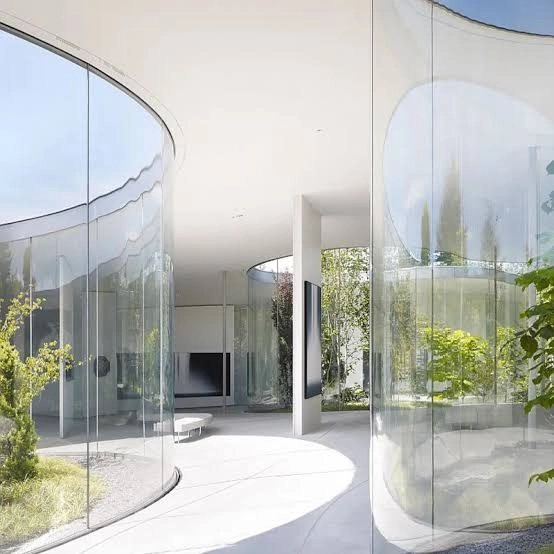
When you start a new commercial building project, selecting the right architectural glazing is critical. Many architects and developers use the terms interchangeably, but there is a clear distinction. Safety glass is a broad category, whereas commercial tailored tempered glass represents a highly specific, custom-fabricated product designed for immense mechanical strength. This article breaks down the exact differences, physical properties, and application scenarios to help you make the right material choices for your next facade or interior fit-out.
Looking for a reliable partner for your next commercial project? Meet GLASVUE, a manufacturer with nearly three decades of deep industry expertise. They do not just supply building materials; they act as an extension of your architectural vision. With products installed in over 130 cities globally, they deliver precision and rigorous quality control. If you need structural stability combined with aesthetic clarity, you will want to check about us to see why top-tier architects specify their materials for complex builds.
Defining the Broad Spectrum of Commercial Safety Glass
Before comparing specific fabrication methods, you have to look at what the industry actually classifies as protective glazing.
The Umbrella Term for Protective Glazing
Safety glass is not a single product. It acts as an umbrella term for any glass manufactured to reduce the likelihood of cutting or piercing injuries upon impact. This category includes multiple variations, such as laminated panels, wired variations, and toughened panels. The main goal is simple: protect people from severe harm during accidental breakage.
Core Characteristics of Standard Laminated Glass
Laminated glazing is a major player in this category. It consists of two or more ordinary panes bonded together by a tough plastic interlayer, usually PVB or SGP. If struck by a heavy object, the pane might crack, but the fragments stick firmly to the plastic film. You often see this used in overhead canopies or areas requiring high security against forced entry.
Evolving Building Code Compliances in 2026
Commercial building codes in 2026 demand stricter impact ratings for high-rise structures and public spaces. Local regulations dictate exactly where you must install protective materials, particularly in zones prone to human impact, such as doors, low-level windows, and stairwell balustrades. Meeting these codes keeps your building legally compliant and safe for daily occupants.
The Specific Nature of Commercial Tailored Tempered Glass
While laminated types focus on holding broken pieces together, the tempering process takes a completely different approach by fundamentally changing the material’s internal stress profile.
Thermal Tempering Process and High Strength
To create this product, factories heat ordinary annealed panels to about 650°C until they soften, then blast them with cold air. This rapid quenching process cools the outer surfaces much faster than the center. The result is a surface locked in heavy compression and a core in tension. This physical change makes the material three to five times stronger than standard options.
Safe Breakage Patterns and Injury Prevention
Because of this immense internal tension, the material reacts uniquely to catastrophic impact. Instead of breaking into large, jagged shards like traditional windows, it shatters completely into hundreds of small, blunt, honeycomb-like pieces. A common site mistake involves contractors attempting to trim the edge of a toughened panel after delivery. The result is always the same: the entire pane shatters instantly into thousands of harmless pieces.
Custom Fabrication for Commercial Architecture
Commercial projects rarely use standard sizes. This is where Tailored Tempered Glass becomes essential. Factories must complete every cut, drilled hole, edge polish, and CNC notch before the panel enters the furnace. You get a fully customized piece ready for immediate installation, perfectly matching your specific hardware and structural requirements.
Key Differences Between Tailored Tempered and Other Safety Glass
You might wonder which option suits your specific storefront or partition. Let us break down the physical and structural contrasts with some hard data.
Table 1: Technical Comparison of Protective Glazing
| Feature | Tailored Tempered Glass | Laminated Safety Glass |
| Manufacturing | Heated to ~650°C, rapid cooling | Heat & pressure bonding with PVB/SGP |
| Impact Strength | 3 to 5 times stronger than standard | Varies, relies on the interlayer |
| Thermal Resistance | Withstands 200°C temperature shifts | Limited by the plastic interlayer |
| Breakage Pattern | Shatters into small, blunt particles | Cracks but adheres to the center film |
| Post-Processing | Impossible (shatters if cut) | Can sometimes be cut (if not toughened) |
Strength and Impact Resistance Comparisons
Toughened panels handle massive blunt force and extreme thermal shocks. They easily survive a 200°C temperature difference across the surface. Laminated panels, while great at preventing penetration, will crack much easier under thermal stress or blunt force unless the individual layers themselves are toughened.
Post-Breakage Behavior and Structural Integrity
If a toughened door shatters, the pieces fall away completely. This leaves an open hole in the frame. Laminated panels behave differently; even when heavily fractured, the sticky interlayer holds the cracked pieces within the frame, maintaining a physical barrier against wind and rain until maintenance crews arrive.
Customization Limitations After Heat Treatment
Once the customized toughening process is complete, the physical shape is permanent. You cannot shave off a few millimeters or drill a new hole for a handle. Precision during the initial measuring and fabrication phase is absolutely non-negotiable.
Applications of Tailored Tempered Glass in Modern Buildings
Different areas of your building demand distinct mechanical properties. Here is where the specific strengths of these materials shine in real-world scenarios.
Frameless Glass Doors and Office Partitions
Modern office designs love transparency. Because tailored tempered glass possesses such high bending strength, you can install it with minimal patch fittings or floor springs. Panels with 10mm or 12mm thickness do not need bulky metal frames to stay rigid, making them the standard choice for sleek, frameless interior doors and conference room walls.
High-Traffic Retail Storefronts and Facades
Retail shopfronts face constant abuse from heavy doors opening, shopping carts bumping the base, and high wind loads. Toughened material resists these daily impacts effortlessly. Its high visual clarity also allows retailers to display merchandise without distortion, drawing in foot traffic naturally.
Structural Glazing and Thermal Stress Zones
Building facades often feature areas where part of a window sits in direct, hot sunlight while the edge stays cool in the shadow of the frame. This creates massive thermal stress that cracks ordinary windows. Toughened materials handle these 200°C temperature swings easily, keeping the building envelope secure year-round.
Quality and Reliability in Tailored Tempered Glass
Producing high-grade architectural materials requires exact machinery and testing protocols to prevent field failures and costly replacements.
Heat Soak Testing for Spontaneous Breakage Prevention
Toughened panels carry a small risk of spontaneous breakage due to microscopic Nickel Sulfide (NiS) inclusions. To fix this, premium manufacturers put the finished panels through a Heat Soak Test. They bake the material at 290°C for hours. If a panel has a dangerous NiS inclusion, it will safely shatter inside the testing oven rather than years later on your building. This process drops the self-explosion rate to below 0.1%.
Advanced CNC Machining and Edge Polishing
Micro-cracks along the edge of a panel are the leading cause of breakage in the furnace. High-end fabrication relies on advanced CNC grinding and polishing to eliminate these invisible defects before the heat treatment. For a closer look at the machinery required for this precision, view these production capabilities.
Strict International Safety Certifications
You cannot just take a factory’s word on safety. Reliable panels must pass rigorous testing to meet global benchmarks. Look for products that hold certifications like SGCC (ANSI Z97.1), Australian AS/NZS 2208, and the Chinese GB 15763.5-2005. To pass, a broken 4mm to 12mm thick panel must yield at least 40 blunt particles within a 50x50mm area.
Elevate Your Commercial Projects with Custom Solutions
Sourcing the right material from a factory capable of handling massive sizes and complex CNC work will make or break your construction timeline.
Comprehensive Glass Production Capabilities
Handling large-scale commercial orders requires serious infrastructure. You need a partner equipped with jumbo-sized tempering furnaces capable of processing panels up to 3300x6000mm without introducing roller wave distortion. Extreme flatness is absolutely mandatory for high-end reflective facades.
Deep Industry Expertise and Global Reach
Working with a manufacturer that understands international logistics and stringent local building codes removes massive headaches for procurement teams. A supplier with a proven track record across hundreds of high-profile global projects brings invaluable technical advice to your design phase, helping you avoid costly specification errors.
Expert Consultation for Your Next Project
Every curtain wall, balustrade, and interior fit-out presents unique challenges. Do not leave your material selection to chance. Reach out to specialists who can guide you through the exact thickness, coating, and tempering requirements for your specific site. Head over to Contact Us to get expert advice on your blueprints and secure the best tailored tempered glass for your development.
FAQ
Q: What is the main difference between tailored tempered glass and standard safety glass?
A: In the broad term of safety glass we have laminated glass, wired glass and tempered glass. This particular type of safety glass is known as Tailored tempered glass, cut to size, precision educed and drilled to exacting custom requirements. Subsequently heat treated at 650°C, this glass is 3 to 5 times stronger than normal annealed glass.
Q: Can I drill a hole in tailored tempered glass after it arrives on the construction site?
A: No. Any attempt to cut, drill, or grind the edges after the thermal tempering process will instantly shatter the panel into thousands of small honeycomb pieces. All customization must happen at the factory before the glass goes into the heating furnace.
Q: Why do some tailored tempered glass panels break on their own, and how can I stop it?
A: Spontaneous breakage is generally caused by the tiny Nickel Sulfide (NiS) inclusions in solar panels that continue to expand over time until they finally fail. By strongly encouraging the factory to perform Heat Soak Testing on all of the panels for your installed project, we can make sure that any that happen to develop defects during the testing process will fail in the oven rather than unexpectedly fail after installation.