
Planning a commercial facade or maybe just a residential bathroom remodel usually brings up strict building code requirements for safety glazing. You will constantly face the choice between two primary options on your spec sheet. But exactly what is laminated safety glass, and how does it actually compare to its tempered counterpart? Let’s get past the technical jargon. We need to look at the exact differences in how these panels are made, their raw strength, and how they handle real-world stress so you can make the right call for your blueprints.
Honestly, finding a reliable glass processor usually makes or breaks your project schedule. GLASVUE steps in here as a seasoned architectural glass manufacturer holding over two decades of deep industry roots. Operating an 85% automated Industry 4.0 production base, the factory houses heavy-duty European equipment, delivering exceptionally flat, defect-free glass. From supplying a towering skyscraper in San Francisco to a massive commercial high-rise in Beijing, this facility knows the exact tight tolerances needed for world-class facades. If your job requires precise cutting, tricky tempering, or customized safety panels, GLASVUE acts as a solid partner to bring those ambitious architectural drawings into reality without the usual unexpected delays.
Fundamental Manufacturing Processes of Safety Glass
The stark contrast in how these materials behave on a job site actually starts right on the factory floor. Their physical traits take shape through entirely different thermal and chemical treatments.
Heat Treatment Process of Tempered Glass
Standard float glass travels through a massive furnace reaching roughly 650°C before hitting a rapid cooling section called quenching. This sudden temperature drop forces the outer surfaces to contract and harden almost instantly, while the hot interior cools at a much slower rate. This specific thermal sequence creates high surface compression alongside internal tension. That tension is exactly what makes the panel so tough against sudden mechanical impacts.
What Is Laminated Safety Glass: The PVB Interlayer Structure
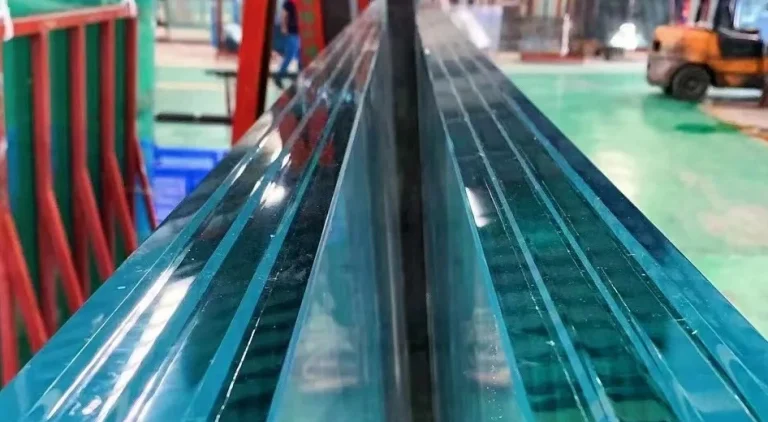
People often ask what is laminated safety glass structurally speaking. Think of it like a transparent sandwich. Manufacturers take two or more lites of normal annealed or tempered glass and permanently bond them together using a tough polymeric interlayer. Usually, this is Polyvinyl Butyral (PVB) or SentryGlas Plus (SGP). The whole assembly then goes into a giant autoclave under intense heat and pressure. The main goal here shifts away from just hardening a single piece of glass. Instead, the focus is on creating a composite barrier that grips together tightly even when someone smashes it with a heavy tool.
Customization Differences of Both Glasses
You absolutely must finalize all your measurements before the tempering phase begins. Once that rapid quenching process finishes, any attempt to cut, drill, or smooth the edge of a tempered panel will cause the whole thing to shatter into tiny pieces instantly. On the other hand, laminated units made from standard annealed lites can technically be cut after they are produced, though it takes a very steady hand to score the glass and safely melt that inner plastic layer. Practically speaking, precise pre-planning remains vital for both types to guarantee clean edges and accurate dimensions on the job site.
Distinct Breakage Patterns and Safety Mechanisms
You really see the true difference between these materials when things go wrong and they fail. The way they break dictates exactly where local building codes allow you to install them. When clients ask what is laminated safety glass capable of handling during a severe impact, looking at the fracture pattern gives you the clearest answer.
Granular Shattering Pattern of Tempered Glass
If an impact finally exceeds its stress limit, a tempered panel disintegrates completely. All that stored internal energy releases in a split second, causing the entire window to crumble into thousands of tiny, pebble-like chunks. This reaction completely removes the risk of getting deep cuts from giant jagged shards. The downside is that the window opening is left completely bare, offering zero physical protection against harsh wind or rain afterward.
Spider Web Fracture of Laminated Glass
Now, if a heavy object strikes this composite panel, the glass layers will probably crack, but those broken fragments stay firmly stuck to the tough PVB or SGP core. You will notice a very characteristic spider web fracture spreading outward from the point of impact. The shards do not fly across the room at all, keeping anyone standing nearby completely safe from dangerous flying debris.
Post-Breakage Structural Integrity
Because the broken pieces remain glued to the inner plastic layer, the damaged window or facade maintains a solid physical barrier against strong wind, heavy rain, and forced entry attempts. This specific mechanism is exactly why architects specify it heavily for overhead glass canopies and coastal hurricane zones. The frame simply holds the broken composite unit securely in place until a maintenance crew eventually shows up for a replacement.
Comparison of Physical Strength and Thermal Resistance
Beyond just looking at what happens during an impact, you need to evaluate how much raw daily force and temperature fluctuation the glazing can survive. The numbers paint a pretty clear picture of their respective strengths.
| Technical Metric | Tempered Glass | Laminated Glass (Standard PVB) |
| Impact Strength | ~90 to 120 MPa | ~20 to 40 MPa (using annealed lites) |
| Thermal Stress Tolerance (ΔT) | 200°C | 40°C |
| UV Radiation Blockage | ~25% | Up to 99% |
| Post-Breakage Barrier | None (Fragments fall out) | Retained securely inside the frame |
| Sound Transmission Class (STC) | ~31 (for a 6mm monolithic panel) | ~35 (for a 6.38mm laminated unit) |
Superior Impact Resistance of Tempered Glass
For surviving pure blunt force, a single tempered panel definitely takes the lead. The compressive surface stress makes it roughly four to five times stronger than regular annealed glass of the exact same thickness. A stray baseball or a heavy blunt object will literally bounce right off a tempered window that would otherwise easily smash a standard living room pane.
Anti-Penetration Ability of Laminated Glass
While the surface might crack under a lighter load compared to a tempered piece, a laminate really shines at resisting deep penetration. A burglar swinging a crowbar at a ground-floor window at 2 AM might shatter the outer layer, but the tough plastic core absorbs those repeated blows, stopping them from creating a hole large enough to climb through.
Thermal Stress Tolerance of Both Types
You might wonder what is laminated safety glass rated for when it comes to extreme heat. Standard laminates handle normal daily climates perfectly well, but the inner plastic layer restricts high-temperature exposure. Tempered glass, however, easily handles severe temperature shifts up to 200°C without cracking. If a specific job needs high heat resistance plus break-safe properties together, factories will simply temper the individual pieces first before laminating them into one heavy-duty unit.
Advanced Functional and Environmental Protection
Modern building demands go way beyond just keeping the rain out. Occupant comfort, lowering energy bills, and preserving interior furniture dictate the real need for high-performance glazing. To fully grasp what is laminated safety glass doing for interior comfort, you have to look closely at room acoustics and sunlight filtration.
Excellent Acoustic Insulation of Laminated Glass
Heavy traffic noise ruins the comfort of any urban space. The polymer interlayer provides a remarkably strong damping effect on sound waves, especially in the annoying mid-to-high frequency range like passing sirens and loud human voices. A standard laminated panel naturally offers noticeably better Sound Transmission Class ratings than a solid lite of similar thickness. That makes it a perfect fit for glass office partitions and busy street-facing windows.
Comprehensive Protection From Harmful UV Rays
Harsh sunlight slowly fades expensive hardwood floors, gallery artwork, and retail store merchandise. Standard clear glass blocks very little ultraviolet light. However, the PVB core sitting inside a laminate actually filters out up to 99% of harmful UV radiation while still letting plenty of natural visible light flood into the room.
Comprehensive Performance Advantages of Our Products
Combining a laminate with a Low Emissivity coating inside an insulated unit basically checks every single box for modern green building certifications. You get solid acoustic control, fading protection, and great thermal insulation all at once. This specific setup drastically cuts down the building’s daily HVAC energy consumption and keeps out unwanted solar heat during the summer months.
Application Strategies in Modern Architecture
Picking the right specification relies entirely on the specific risks and daily functional demands of the installation zone. Contractors often question what is laminated safety glass actually required for in local building codes when compared to tempered units.
Indoor Scene Applications of Tempered Glass
Because it holds up incredibly well against direct hits and heat, builders rely heavily on it for frameless bathroom shower doors, sleek interior glass walls, heavy table tops, and kitchen areas near hot stoves. It offers a very clean, structural look combined with high daily durability.
Deployment of Laminated Glass in High-Risk Areas
Any spot where falling glass could badly injure pedestrians walking below strictly demands a laminate. This rule covers glass floors, overhead skylights, sloped glazing, and high balcony railings. It also remains the absolute baseline requirement for luxury storefronts and ground-floor retail windows that are prone to smash-and-grab burglaries.
Tailored Production Capabilities of Complex Projects
Sometimes a massive project requires the absolute best of both worlds: tempered laminated glass. Manufacturing these exceptionally thick, heavy, and complex units demands top-tier factory machinery to avoid annoying visual distortion or edge delamination. You can review our specific production capabilities to see exactly how advanced convection furnaces and dust-free clean rooms manage these stringent architectural demands flawlessly.
Partner With a Premium Manufacturer for Your Next Glass Project
Sourcing the right materials dictates the long-term success of your architectural vision. Now that you clearly understand what is laminated safety glass designed to do, locking down a high-quality supply chain becomes your next critical step.
Premium Laminated Glass Series Products
Upgrade your building’s safety rating and acoustic comfort by specifying top-tier laminated glass. Engineered strictly for clarity and structural resilience, these composite units provide the ultimate defense against both extreme coastal weather and loud urban noise.
Brand Heritage and Corporate Vision
Holding decades of manufacturing expertise and a strict commitment to green building standards, we take real pride in delivering materials that easily pass the toughest global certifications, including SGCC and AS/NZS 2208. Go ahead and read more about us to see how our factory engineering standards perfectly align with your own design philosophies.
Exclusive Professional Project Consultation
Skip the risky guesswork. Whether you are currently dealing with complex curved geometries or specialized acoustic barriers for a hotel, our engineering team stands ready to assist. Reach out and contact us today for accurate technical advice, site risk assessments, and highly detailed project estimates.
FAQs
Q: What is laminated safety glass used for most commonly in commercial builds?
A: It is predominantly used in car windshields, overhead skylights, hurricane-impact windows, and high-security storefronts. Builders constantly choose it for any application where maintaining a solid physical barrier after accidental breakage is absolutely critical to public safety and security.
Q: Can you cut tempered glass after it has been manufactured?
A: Definitely not. The rapid thermal quenching process puts the panel under immense internal tension. Any attempt to cut, drill, or even slightly modify the surface will cause the entire piece to shatter instantly into granular chunks. All your fabrication work must occur before the tempering process starts.
Q: Does a thicker monolithic glass panel always mean better soundproofing for a room?
A: Not necessarily. While adding raw mass does help block noise, the viscoelastic damping core hidden inside a laminated unit disrupts sound wave transmission much more effectively than just installing a thicker, solid monolithic panel. Laminates target specific annoying frequency ranges that thick glass alone simply cannot block.