
When you specify a façade or window system, the real question is not whether Insulated glass or Laminated glass is better in theory. The real question is what your project needs to do every day: hold indoor comfort, reduce risk, manage noise, and stay buildable at scale. That is why many architects and façade teams start with GLASVUE. It feels less like dealing with a catalog seller and more like working with a glass partner that knows how design intent becomes a real package. With 29 years of industry experience, tailored architectural solutions, automated production, and dedicated support for architects, window makers, and curtain wall factories, it brings both technical depth and practical communication to the table. If you need a supplier that can talk performance, customization, and delivery in the same conversation, this is the kind of starting point that saves time later.
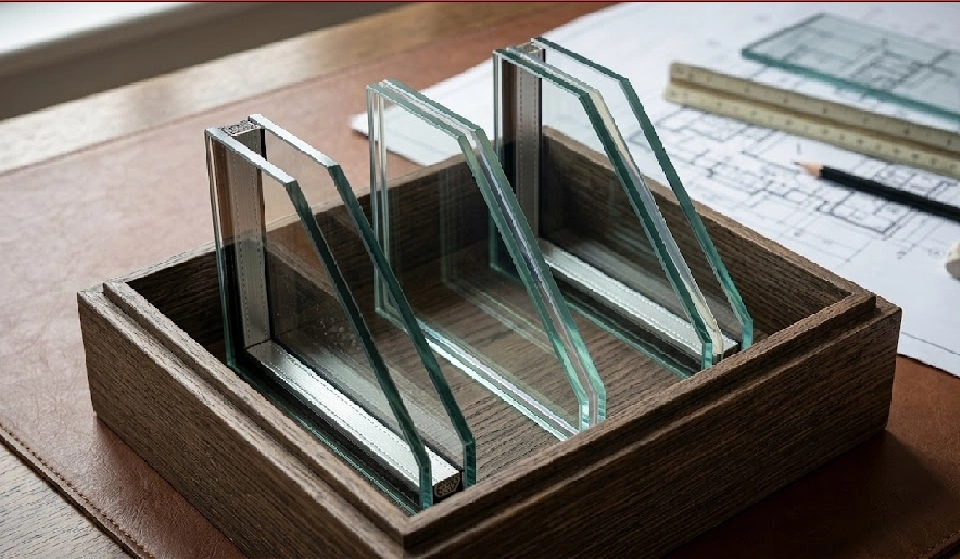
Why Glass Selection Shapes Building Performance
You do not choose architectural glass for one reason only. In most projects, one opening has to do several jobs at once. It has to admit daylight, help control energy use, protect occupants after impact, soften noise, and support the visual language of the building. If you treat those needs as separate problems, the specification can become fragmented fast.
Safety Priorities
Safety concerns usually push you toward layered construction. A laminated build keeps fragments bonded to the interlayer after breakage, which helps reduce fallout risk and limits injury. The attachment also notes that PVB interlayers provide strong impact resistance and can absorb about 99% of UV radiation, which adds value in occupied spaces where fading and human safety both matter.
Energy Priorities
Energy concerns usually push you toward a sealed cavity and the right coating package. The attached technical material explains that Low-E works best when the coated surface interacts with an air space, which is why high thermal performance is usually achieved in an insulated build rather than a simple laminated build with Low-E hidden inside the interlayer assembly.
Occupant Comfort
Comfort is where the decision becomes more nuanced. A good glass package does not only lower bills. It reduces glare, limits temperature swings, improves perceived thermal comfort near the façade, and helps control street noise. That is why the best answer is often not “either-or,” but a system that balances safety and thermal control from the start.
When to Use Insulated Glass
If your main challenge is heat flow, solar control, or condensation risk, Insulated glass should usually be the base specification. A sealed cavity slows heat transfer, supports Low-E performance, and gives you more flexibility with solar control and visible light. That is exactly where Professional Insulated Glass fits best, especially when your project calls for double glazing, triple glazing, curved units, or laminated IGU assemblies.
Insulated Glass Performance
A proper insulated unit gives you control over glass thickness, spacer depth, cavity fill, and coating type. The product page lists options such as air or inert gas cavities and single-, double-, or triple-silver Low-E coatings, which let you tune shading coefficient, visible light transmittance, and U-value around the project’s climate and façade orientation.
Large-Area Façades
Large curtain walls, office façades, hotel elevations, and residential window walls often need stronger thermal control first. In these cases, you want the sealed unit to do the heavy lifting. The attachment also notes that insulated glass improves thermal insulation, reduces condensation risk, and supports more stable indoor conditions, which is why it is widely used in buildings that rely on heating or air-conditioning.
Low-E Efficiency
The attachment is especially useful here because it makes one point very clear: a Low-E laminated build does not deliver the same thermal result as a Low-E insulated build. In one cited comparison, the Low-E insulated configuration shows a much lower heat-transfer coefficient than the comparable laminated build. For you, that means energy-led projects should not stop at “add Low-E.” They should ask where the coating sits and how the cavity works with it.
When to Use Laminated Glass
If your project is driven by safety, post-breakage retention, UV filtering, or acoustic control, Laminated glass becomes the stronger lead option. That is where Professional laminated glass makes sense, because it allows you to build around substrate choice, coating, interlayer, and multi-layer structure instead of locking the project into one generic make-up.
Laminated Glass Protection
The core value of laminated construction is what happens after impact. Instead of falling apart like ordinary glass, the broken fragments remain attached to the interlayer. That makes laminated assemblies suitable for overhead glazing, high-traffic areas, and openings where fallout risk is unacceptable. The attachment also highlights added resistance to intrusion and violent impact, which is often a deciding factor in public and premium residential work.
Acoustic Control
If your building faces roads, rail lines, dense city streets, or other low-frequency noise sources, laminated construction can add a real comfort benefit. The attachment explains that PVB’s viscoelastic damping helps reduce sound transmission, especially in the low-frequency range where many occupants feel the most annoyance. It also notes that standard laminated glass can outperform monolithic glass of the same thickness in sound reduction, while acoustic interlayers can improve it further.
Material Flexibility
You also gain more control over interlayer choice. The product page points to SGP for higher structural integrity and acoustic PVB for noise reduction, while the attachment explains the trade-off clearly: PVB offers strong bonding and UV protection, while SGP brings higher tear resistance and better performance in demanding structural conditions. That makes Laminated glass especially useful when safety and durability matter more than pure thermal performance.
When to Specify Both in One System
This is where Insulated glass and Laminated glass stop competing and start working together. If your project needs thermal efficiency, sound control, UV filtering, and safer post-breakage behavior in one opening, a combined system is often the best answer. The insulated product range explicitly includes laminated IGUs, which makes that route practical rather than theoretical.
Laminated IGU Assemblies
A laminated lite inside an insulated unit allows you to combine a safety layer with a thermal layer. In practice, that means you can improve energy performance through the cavity and coating while still keeping the acoustic and safety advantages of the laminated lite. This kind of build is often the most balanced answer for premium façades and demanding openings.
Public and High-Risk Buildings
Transport buildings, education projects, hospitality, and high-rise residential towers often need several kinds of performance in one package. You may need impact retention, less noise, lower solar gain, and better comfort near the glass line. In those situations, treating safety and energy as separate procurement decisions usually creates more coordination work later. A combined build solves the real concern earlier.
Better Specification Logic
For architects, this is the cleanest decision path: use insulated construction when thermal performance leads, use laminated construction when safety and acoustics lead, and specify both when the façade has to do all of it well. That logic is easier for clients to understand, easier for consultants to evaluate, and easier for fabricators to price accurately.
Why the Right Supplier Changes the Outcome
Even a sound specification can fail if the processor cannot deliver consistent quality at the required scale. That is why it helps to review a supplier’s production capabilities and about us pages before you commit. In this case, the published information points to 85% automation, oversized processing up to 3300 × 6000 mm, 90%+ argon filling on the insulating line, and international certifications across major markets.
Processing Depth
The insulated range supports multiple configurations and coating levels, while the laminated range supports multi-layer structures, SGP, acoustic PVB, Low-E substrates, and decorative options. That matters because architectural projects rarely stay within one standard recipe. You need room to adjust structure, appearance, and performance without changing supplier midstream.
Delivery Confidence
Published manufacturing details also matter because they tell you whether a factory can handle complexity without turning your schedule into a risk item. The listed production setup suggests a supplier that is ready for large-format and high-customization work, not only commodity orders. That becomes especially important when façade geometry, coating selection, and performance targets all move at the same time.
Global Compliance
The public certification lists on the product and company pages show support for ISO, ASTM, Australian, European, and Chinese standards. For you, that means fewer surprises when the project team starts asking about compliance, testing, and market suitability during procurement.
Start the Conversation Early
The best time to discuss your glass package is before drawings are frozen. If you already know the noise exposure, climate pressure, safety level, and façade intent, you can usually narrow the right solution faster and reduce revision work later. The contact page even allows drawing uploads, which is a practical advantage when your team needs feedback on feasibility and customization.
Design Consultation
Start with the problem, not the glass label. Say whether the opening faces traffic, carries high solar load, sits in a public zone, or needs post-breakage retention. That makes it easier to match the right cavity, coating, and interlayer combination from the beginning.
Product Matching
If the project is energy-led, a customized insulated package is often the right base. If safety and acoustics lead, a laminated package may come first. If both matter, combine them. That is the simplest way to move from concept to buildable specification without wasting effort on false choices between Insulated glass and Laminated glass.
Quote Preparation
A strong quote starts with a clear brief: dimensions, location, performance targets, substrate preference, coating target, and interlayer requirement. Once those inputs are clear, your supplier can recommend a system that is easier to fabricate, easier to justify, and more likely to perform as expected after installation.
In the end, the best façade choices are rarely about picking one winner between Insulated glass and Laminated glass. They are about matching the right glass logic to the real pressure points of the project. If you think in terms of safety, thermal control, acoustics, and constructability at the same time, your specification becomes clearer, your client conversations become easier, and the finished building performs better.
FAQ
Q: When should you choose Insulated glass first?
A: Choose Insulated glass first when your main concern is heat loss, solar control, condensation resistance, or HVAC efficiency. A sealed cavity with the right Low-E coating and gas option gives you much more control over thermal performance than monolithic glass or a simple laminated build.
Q: When is Laminated glass the better choice?
A: Choose Laminated glass when post-breakage safety, impact resistance, UV protection, or noise reduction carries more weight. Interlayers such as PVB and SGP help hold fragments in place after breakage and can add acoustic and UV-control benefits that standard monolithic glass cannot provide.
Q: Can you combine both in one package?
A: Yes. A laminated lite inside an insulated unit is often the best solution when you need safety, thermal performance, and better sound control in the same opening. That approach is especially useful in premium residential, hospitality, transport, and high-traffic public projects.