
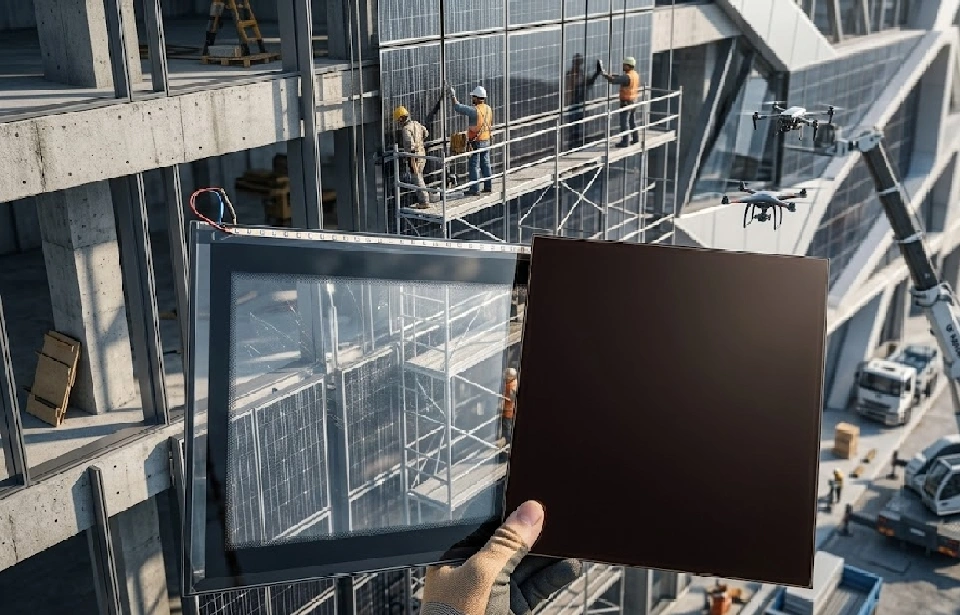
Having gathered more than twenty-five years in the glass sector, I have observed the change in building covers from basic shields to lively, power-making layers. At GLASVUE, we go beyond basic glass handling; instead, we team up with builders to bring energy into their fresh ideas. Our About Us tale comes from chasing top quality, drawing on an Industry 4.0 setup that hits 85% machine work. Be it using GLASTON heat lines or Bystronic handling, our aim stays to supply the smoothest, steadiest sheets globally. As the 2026 scene turns to low-carbon goals, picking the proper Perovskite PV Glass choice turns from a mere tech pick into a pledge to city building’s tomorrow. If you aim to turn your front into an energy maker, kindly Contact Us to learn how we might help your coming task.
The 2026 BIPV (Building-Integrated Photovoltaics) scene signals a key change where sun tech has to fit style needs. You probably face picking between known options and fresh breakthroughs. This review figures out why one clear tech stands ready to lead the top building view.
The Global Evolution of the BIPV Market in 2026
Escalating Demand for Zero-Carbon Commercial Buildings
World energy rules now require that work buildings head to net-zero levels. You no longer seek glass that only holds heat; you want glass that helps the building’s power needs. Usual still windows give way to working power-making fronts to hit these strict green checks.
Impact of Urban Smart City Infrastructure Policies
Wise cities now blend power making into all open spots. In tight city spots, roof room runs short, turning the side front into the main place for sun gain. This move needs items that work under mixed light while keeping the city line’s build strength.
Shift Toward High-Transparency Façade Glazing Solutions
Builders and users call for real light. The time of dark sun sheets “fixed” on a building ends. The scene now picks “hidden” sun fixes that give strong visible light pass (VLT). You need a fix that seems like a fine window yet works like a sun cell.
Technical Innovations of Perovskite PV Glass Technology
Superior Solar Energy Conversion Efficiency and Yield
The growth of Perovskite PV Glass comes from its strong light-catch skills. Unlike usual silicon, this chip item grabs a wider range of sun rays. In common setups, you can count on power from 60W to 150W per square meter. This solid gain means even a fair-sized front can run a good share of a building’s lights and air systems.
Tunable Optical Transparency for Architectural Design Freedom
A top draw to pick this tech lies in its flexible nature. You can set the light pass to match your task’s exact wants. Be it a clear sight for a high-end display space or a shaded look for a closed office block, the sheet depth adjusts without a big fall in power work.
GLASVUE Ultra-Clear Tempered Base Material Stability
We boost this tech using a 6mm ultra-clear tempered glass bottom. By placing the perovskite sheet between two strong glass layers, we form a stacked build that holds up as well as it works. This setup offers a 15-year look promise and a 25-year straight power promise, bringing calm for lasting puts.
Performance Characteristics and Challenges of CdTe Solar Glass
Established Industrial Manufacturing and Reliability Records
Cadmium Telluride (CdTe) has stood as a key in the thin-sheet field for years. Its making way is full-grown, and it holds a long list of work in big sun fields. You may eye it for tasks where plain, tested steadiness marks the sole win measure.
Performance Advantages in High-Temperature Tropical Environments
CdTe glass holds steady when heat climbs, keeping its work better than some old silicon sheets. This sets it as a sound pick for tasks in warm zones where sun beats hard and warmth stays steady.
Strategic Environmental Concerns Regarding Cadmium Recycling
Though reliable, CdTe hits big blocks in the BIPV area. The cadmium part—a heavy metal—stirs worries over harm and end-use reuse. As green build rules sharpen on loop economy and item health, the green mark of cadmium turns a tough jump for your green aims.
Comparative Analysis of Structural Efficiency and Safety Standards
Lightweight Integration within High-Rise Building Skins
Build weight stands as a main worry for tall spots. Perovskite PV Glass fits as a thin sheet in usual stacked builds, so it adds little extra load next to plain show glass. This lets you shift to a power-making front without redoing the full build hold of the spot.
GLASVUE Multi-Layered Sound Insulation Excellence
Calm marks a sign of fine living. Our sun glass sets give strong sound work, with Rw from 35dB to 42dB. By drawing on a PVB stacked build, we soak city racket, making sure your power-smart building also serves as a spot of peace.
Variable Transmittance and Solar Heat Gain Control Parameters
Past power making, these sets act as smart sun hold glass. You can handle the Shading Coefficient (Sc) and Solar Heat Gain Coefficient (SHGC) well. This two-way work—making power while sending back warm infrared—cuts the pull on your building’s cool setups a lot, leading to quicker money back.
Economic Payback and Long-Term Durability Benchmarks
Significant Reduction in Levelized Cost of Electricity
Though the first cost in BIPV tops usual glass, the Levelized Cost of Electricity (LCOE) drops fast. Since the glass works as both the building’s cover and its power well, you in truth “gain twice” on your item costs. This tech now hits a spot where the made power covers the glass cost in just some years.
Rapid Energy Payback Time in Urban Dense Environments
In a city such as Guangzhou or Singapore, a 1000-square-meter set can make 200KW to 750KW of power each day. When you figure in carbon cut gains and lower bill pays, the power back time runs much shorter than old roof sun, above all when flat room sits dear.
Comprehensive Power Output and Aesthetic Quality Warranties
To keep your task as a key mark, our Perovskite PV Glass carries a 25-year straight power out bond. We hold tight Production Capabilities to make sure the air-free seal and stack steps block water entry, which once posed a past issue for this tech. In addition, our teams run full checks on each batch to spot any weak points early, ensuring that the final product reaches your site in perfect condition ready for seamless fitting into your building plans.
Partnering with GLASVUE for Advanced Solar Solutions
Next-Generation Industry 4.0 Production Capabilities for Precision
Our plant shows proof of glass handling’s tomorrow. By mixing top GLASTON and NORTH GLASS heat ovens, we confirm every sheet hits the best marks for smooth and sharp. This care matters for PV glass, since any face bend can shift the light way and cut power work. We also use advanced sensors during the process to monitor temperature and pressure levels in real time, which helps us maintain consistency across large production runs and reduces the risk of defects that could impact overall project timelines.
Architectural Collaboration and About Us Brand Vision
We hold that glass forms the heart of the building. Our view seeks to give fitted building fixes that share a tale. We join near with shapers to confirm the sun blend lifts the look instead of pulling it down. We stand not just as a giver; we serve as your tech teammate in making hard, high-work building layers.
Global Project Consultation and Contact Us Support
Working over more than 130 cities, we bring the ship and tech know-how to back your task anywhere worldwide. From the start power guess to the end fit guide, our group stands set to offer a full help flow. If you plan a low-carbon key spot, Contact Us now to check your task needs. Our experts can provide detailed simulations based on your location’s sunlight patterns, helping you estimate annual energy production and integrate it smoothly with your overall design goals for maximum benefit.
Picking Perovskite PV Glass in 2026 forms a smart step that weighs power gain, building charm, and green duty. As cities rise higher and the weather issue grows, your front must handle more. It must work. It must hold well. It must be GLASVUE.
FAQ
Q: How does Perovskite PV Glass handle low-light conditions compared to CdTe?
A: Perovskite PV Glass shows great feel for dim light and spread light spots. While CdTe stays solid in straight heat, perovskite keeps making good power on cloudy times or when sun sits at a sharp tilt, setting it far better for side fronts in packed city zones.
Q: Is the transparency of the solar glass high enough for residential use?
A: Yes. With a set shade level, we can hit strong clearness that looks like usual building glass. You can pick a light pass that gives a sharp sight while still gaining up to 60W per square meter, making sure no loss in home ease.
Q: What is the mechanical load capacity of these solar units?
A: Our sets build on tempered ultra-white glass, letting them take push loads up to +3000Pa. They fill world safety rules (SGCC, AS/NZS) for tall buildings, making sure they stay as safe as any high-work build glass in the field.