
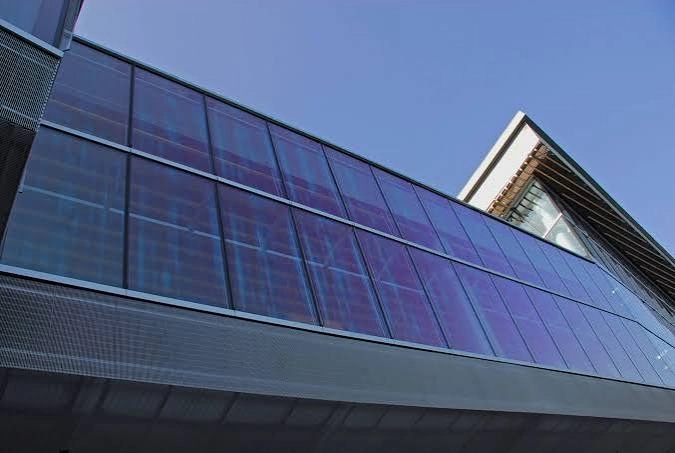
Tailored Tempered Glass gives architects a stronger response to heat than ordinary annealed glazing, but it is not a fireproof shield or a universal answer for every hot location. Its real advantage is resistance to thermal stress: the surface compression created during tempering helps the pane survive sharper temperature differences and faster changes. That matters near sun-heated facade shadows, warm equipment, kitchen screens, skylights, and spandrel zones.
At GLASVUE, the discussion starts with the whole build-up because peak glass temperature, temperature difference across the pane, edge quality, framing, coatings, shading, and the speed of heating or cooling all affect the choice.
What Heat Resistance Means in Architectural Glass
Heat resistance is often discussed as if it were one number. For a building specification, you need to separate three conditions: steady operating temperature, thermal shock, and fire exposure. A pane may tolerate a hot surface yet fail when one area heats much faster than another. The company’s architectural glass background is useful context for this distinction. Fire resistance is a different property and requires a tested fire-rated assembly.
Surface Compression and Thermal Stress
During production, glass is heated close to its softening region, around 650°C, and then rapidly cooled. The outer surfaces solidify in compression while the core remains in tension. When a hot zone expands beside a cooler zone, the compression reserve makes tempered glass less vulnerable to the tensile stress that starts cracks in annealed glass. The related guide to thermal stress in spandrel glass examines why absorption, edge conditions, and uneven exposure must be read together.
Temperature Difference Across One Pane
The project technical guide uses a 200°C temperature difference as its tempered-glass thermal-shock benchmark. It also describes thermal stability as roughly 2.5 to 3 times that of annealed glass. These figures are useful screening points, not permission to expose every unit to the same conditions. Pane size, thickness, edge finish, drilled holes, ceramic coverage, coating absorption, frame bite, and previous damage all change the result.
Continuous Heat Versus Sudden Change
A slowly warmed pane and a cold pane hit by concentrated heat do not face the same stress. Sudden airflow from cooling equipment, a dense shadow line across sunlit glass, or a hot appliance close to one edge can create a steep gradient. In practice, the gradient is often more important than the room temperature printed on a mechanical schedule.
Where High Temperatures Create Real Design Risk
High-temperature glazing problems usually begin with uneven exposure or restrained movement. A facade can be safe through most of the day, then see a short critical period when sunlight moves across a deep mullion shadow. Interior conditions can be just as demanding when heat is concentrated near a cutout or edge.
Solar-Heated Facades and Spandrels
Tinted substrates, solar-control coatings, dark frit, blinds, and insulated backpans can raise absorbed heat. Partial shading then divides the pane into hot and cool bands. A thermal review should model the actual orientation, surrounding buildings, frit coverage, coating position, interior finishes, and ventilation behind the glass.
Hot Interior Zones
Screens near commercial kitchens, fireplaces, radiant heaters, process equipment, or high-output lighting need a stated minimum separation from the heat source. Direct flame contact and fire compartmentation fall outside ordinary tempered glazing. A local hot spot near a socket, notch, or exposed edge deserves particular attention because edge flaws act as crack starters.
Cold Water and Rapid Cooling
Heat shock can also occur during cooling. Rain on a sun-heated canopy, wash water on a hot facade, or a strong cold-air jet against one portion of the lite can contract the surface unevenly. Maintenance plans should avoid washing glass at its hottest time and should keep air outlets from striking a small area continuously.
A Practical Heat-Exposure Comparison
The table separates common project questions. Values describe selection logic rather than a stand-alone guarantee; final glass makeup and support conditions need project review.
| Exposure Condition | Main Failure Driver | Appropriate Design Response | Evidence Needed Before Approval |
| Uniform warm environment | Sustained material and seal exposure | Check the glass, interlayer, sealant, gasket, and frame as one assembly | Component temperature limits and system details |
| Sun with hard shadow lines | In-plane temperature gradient | Use heat-strengthened or tempered construction after thermal analysis | Orientation, shading, absorption, pane geometry |
| Concentrated interior heat | Local hot spot near edge or cutout | Increase separation and remove edge stress concentrations | Heat-source temperature, distance, airflow |
| Hot glass followed by water or cold air | Rapid surface contraction | Specify suitable safety glass and control maintenance or airflow | Maximum expected temperature change rate |
| Fire boundary | Flame, hot gases, and required integrity | Use a purpose-tested fire-rated system | Complete assembly test classification |
How to Specify Tailored Tempered Glass
A useful specification does more than name a glass type. It records the load case, processing details, edge condition, and glazing system so the fabricator can assess the real thermal and structural demand. The tempered glass product range provides a practical point of reference once those project inputs are defined.
Tailored Tempered Glass Geometry
Thickness should follow structural loads, support conditions, aspect ratio, holes, notches, and local stress, not heat alone. Large panes and complex cutouts may require tighter distortion and roller-wave limits. All cutting, drilling, notching, and edge finishing must be completed before tempering because the finished pane cannot be resized safely.
Edge Quality and Frame Clearance
Clean, fully processed edges reduce the flaws from which thermal cracks can grow. The frame must allow normal expansion without hard contact. Setting blocks, bite, edge clearance, gasket pressure, and drainage should suit the pane size and installation method. A strong lite can still fail when a fastener or frame corner creates a point load.
Coatings, Frit, and Laminated Builds
Coatings and ceramic patterns change solar absorption, while laminated and insulating constructions change heat flow between surfaces. Ask for a thermal check on the complete makeup, including coating surface, frit percentage, cavity, interlayer, backing, and indoor temperature. The relevant thermal processing scope also helps confirm that cutting, edgework, heat treatment, lamination, and insulating assembly can follow the approved sequence. A glass label by itself does not reveal those interactions.
Move from Heat Data to a Buildable Lite
The final decision should connect the heat source, orientation, opening schedule, pane geometry, surface treatments, edgework, and frame bite in one review. Send those inputs and the design temperatures through the high-temperature glass enquiry. That is how Tailored Tempered Glass becomes a checked build-up rather than a vague temperature promise.
FAQs
Q1: What should you send before specifying Tailored Tempered Glass near heat?
A1: Send the heat-source temperature, distance, airflow, pane dimensions, shading pattern, coating or frit, frame detail, and required fire performance. Ordinary tempered architectural glass should not be treated as a fire barrier or flame-contact material.
Q2: Does a thicker pane automatically solve a thermal-gradient problem?
A2: No. Thickness affects structural behavior, but absorption, shading, edge quality, pane geometry, restraint, and heating or cooling rate can control crack risk. Review the complete construction.
Q3: Which fabrication decisions are locked before tempering?
A3: Final dimensions, holes, notches, and edgework must be approved first. Cutting or drilling after heat treatment disturbs the balanced stress pattern and can cause breakage.