
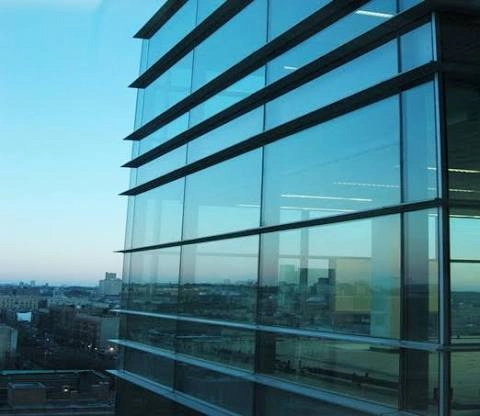
Insulating Glass looks simple when you see it installed, When most people hear the term ‘glass’, they often think of it in terms of how it looks, particularly for that used in residential windows and doors. However, for commercial windows and doors, glass does so much more than just how it looks. It can determine the degree of comfort that you feel inside a building, as well as determine how your energy costs are going to be, how much noise is going to come into a building, as well as how prone a building is to condensation, and even how ‘clean’ a façade appears from the street can appear, as well as how ‘heavy’ it feels.
GLASVUE has 29 years of experience in the field of architectural glass, with a production area of over 20,000m² and an annual capacity of 300,000m² of IGU’s, making them more than just a small workshop. For projects that require serious performance data and a consistent production line as opposed to just some nice images in a catalog, GLASVUE provide the ideal solution.
Once you get past the sample stage, the real question is not whether to use glass, but what kind of glass build will hold up in the building you are working on. That is where Professional Insulated Glass starts to make sense, because it can be made as double glazing, laminated IGU, triple glazing, curved IGU, and Low-E based units with different cavity, spacer, and gas filling options.
Why Does Insulating Glass Matter for Commercial Windows and Doors?
Lower Heat Flow and More Stable Rooms
Commercial buildings often use much more glass than older buildings did, especially in offices, hotels, retail stores, schools, hospitals, and mixed use developments. When the glazing is poorly matched, the result is familiar enough: hotter perimeter zones, more load on cooling equipment, and uncomfortable temperature swings near the window line. In some office projects, the west façade starts causing complaints first, usually in late afternoon when the sun sits low and hard.
Insulating Glass cuts heat flow by separating panes with a sealed dry cavity. That cavity reduces heat transfer compared with single glass, and when you add Low-E glass, the unit can reflect part of the long wave radiant heat that would otherwise pass more freely. If argon is added, the thermal result gets better again because argon transfers less heat than ordinary air.
Better Comfort Where People Actually Notice It
Most end users will never ask about SHGC in a meeting, but they do notice when a room feels stuffy, when traffic noise carries through the façade, or when fog shows up inside the unit. Commercial glass is judged in practical ways. If the room works, nobody talks about it. If it does not, everyone does.
That is one reason Insulating Glass is used so widely in commercial windows and doors. It is not only about lowering energy use. It is also about keeping indoor conditions steadier and making the glass less troublesome over time. For hotels, clinics, office towers, and busy storefronts, that is a very real value.
What Sits Inside a Good Insulating Glass Unit?
Glass Build and Cavity Width
A standard Insulating Glass unit uses two or more panes with a sealed cavity between them. Double glazing suits many projects. Triple glazing is often chosen when lower U value is needed, especially in colder areas or on larger glazed elevations. Laminated IGU is useful where safety matters more, such as entrances, public walkways, lower façade zones, and hospitality projects where broken glass staying bonded is an advantage.
Cavity width also matters. Common widths include 6mm, 9mm, 12mm, 15mm, and 16mm. Bigger is not always better, which is something buyers sometimes assume too quickly. The cavity has to work with the full build, not by itself.
Spacer, Desiccant, and Double Sealing
Inside the unit, the spacer keeps the panes apart and helps define the cavity. The desiccant inside the spacer absorbs moisture and helps keep the cavity dry. If moisture gets inside later, the result may be fogging, and once that starts, nobody on site is happy about it.
The seal system is just as important as the glass itself. A normal double seal uses butyl as the first seal because it is strong against water vapor and gas leakage. The second seal is usually polysulfide or silicone structural sealant, depending on where the glass will be used. For hidden frame and semi hidden frame curtain walls, silicone structural sealant is usually the safer route because the outer edge works harder there. It is not the flashy part of the product, admittedly, but a weak seal can cause oil bleeding, gas loss, early aging, or internal fogging later.
Which Numbers Matter Before You Place an Order?
U Value, SHGC, and VLT
Before you confirm an Insulating Glass build, three figures deserve early attention: U value, SHGC, and VLT. U value tells you how much heat passes through the glass. Lower is better for insulation. SHGC tells you how much solar heat enters the room. Lower values help more in hot climates and on elevations with strong sun exposure. VLT, or visible light transmission, shows how much daylight comes through.
The right combination depends on the job. A shopping center in a hot city may care more about SHGC. A hotel in a cooler region may push harder on U value. A showroom may need more daylight and cleaner color. There is no single number that solves every building, and that is usually where generic quoting falls short.
| Glass Type | VLT | U Value W/(m²·K) | SHGC | Typical Use |
| Reflective Glass | 30% to 65% | 4.99 to 5.67 | 0.39 to 0.67 | Exterior shading and color control |
| Single Silver Low-E | 35% to 71% | 1.73 to 1.81 | 0.29 to 0.56 | Standard energy saving windows |
| Double Silver Low-E | 41% to 72% | 1.61 to 1.64 | 0.22 to 0.44 | Office façades and larger glazed areas |
| Triple Silver Low-E | 41% to 63% | 1.61 to 1.66 | 0.21 to 0.29 | Projects with stronger solar control needs |
Sound Control, Dew Point, and Argon Filling
Thermal numbers are not the full story. Sound and moisture control matter too. A 6mm single glass pane may reduce noise by about 31 dB, while a 6+12A+6 ordinary IGU may reach around 35 dB. That difference is useful, but if the project sits near heavy traffic or other steady noise, laminated IGU often does a better job than simply widening the cavity and hoping it fixes everything.
Dew point is another useful check. Standard IGU dew point is usually below -40°C, and argon filled units can reach about -80°C. If internal fog appears later, the common reason is not normal surface moisture. It is more often a problem with sealing or cavity dryness.
| Performance Item | Typical Data | What It Means |
| 6mm Single Glass U Value | About 5.8 to 6.0 | Higher heat transfer |
| Ordinary Double IGU U Value | About 2.9 to 3.1 | Clear improvement over single glass |
| Argon Filled IGU U Value | About 2.5 | Better thermal insulation |
| 12A Argon Cavity Effect | About 0.3 lower | Useful for energy focused projects |
| Standard IGU Dew Point | Below -40°C | Lower risk of cavity fogging |
How Do You Choose Insulating Glass for Different Commercial Areas?
Office Façades and Curtain Walls
Office façades usually need a careful balance between daylight, heat control, appearance, and long term reliability. If the building has wide glass spans or strong sun on east and west sides, a basic clear unit may not be enough. Double silver or triple silver Low-E units often make more sense there because they reduce solar heat more effectively while still keeping decent visible light.
For curtain walls, edge treatment also matters. Low-E glass usually needs edge deletion before assembly so the coating near the edge does not interfere with bonding. After that come washing, frame assembly, glass pairing, sealing, and curing. It sounds routine, maybe too routine, but that sequence is often where the difference between a clean project and later callbacks begins.
Storefronts, Doors, Hotels, and Healthcare Spaces
Storefront glass needs to do several jobs at once. It has to look clear, handle traffic, support safety, and still help with solar and thermal control. For lower level doors and public facing zones, laminated IGU is often the more sensible choice because the interlayer helps hold broken pieces together.
Hotels and healthcare spaces bring another layer of demand. Guests and patients both care about quiet rooms and steady temperature, even if they never say it in technical language. In these settings, Professional Insulated Glass built with laminated glass, Low-E glass, or argon filling often gives a better all round result than a basic double glazed unit.
If you want to check who is behind the factory side of the work, the about the manufacturer page gives a clearer picture of the production background and project experience.
What Factory Details Affect Long Term Results?
Edge Deletion, Cleaning, and Gas Filling
A good Insulating Glass unit depends on more than the final specification sheet. Edge deletion has to be done properly on Low-E glass. The glass surfaces have to be washed cleanly. The spacer and desiccant need proper handling. Sealing and curing must stay consistent, not rushed because the truck is waiting outside.
Argon filling also only works when the seal holds. Saying a unit is argon filled is easy. Keeping that performance stable is the harder part.
Size Capacity and Quality Control
Commercial projects regularly involve large panels, repeated batches, and different glass builds in one order. That can strain a factory that only handles simple standard units. The production capabilities page is worth checking because it shows jumbo line capacity up to 3300mm × 6000mm, 90%+ argon gas filling, and support for three glass two cavity structures. Those details are useful when your project has oversized façades, layered safety glass, or mixed IGU types.
Why Talk to the Manufacturer Early?
Matching Professional Insulated Glass to the Actual Project
Commercial buildings rarely use one glass structure everywhere. The entrance may need laminated safety glass. Guest rooms may need lower U value. West facing façades may need tighter SHGC control. Curved corners may need curved IGU. That is why Insulating Glass should be matched to the actual building zones rather than copied from one general note.
Professional Insulated Glass gives you room to adjust thickness, cavity width, Low-E type, reflective color, gas filling, spacer choice, and safety layer without forcing the full project into one simple build that does not really fit.
Technical Support and the Next Step
When you are ready to move from idea to quotation, it helps to send drawings, glass schedule, target U value, SHGC, VLT, size, quantity, and installation type early. That lets the technical team check the glass build against the real job instead of quoting too loosely and fixing problems later. For the next step, you can use the contact page to send project information and discuss a workable build for your commercial windows and doors.
FAQ
Q: What is the main benefit of Insulating Glass for commercial windows and doors?
A: It reduces heat transfer and helps keep indoor conditions steadier. When Low-E glass, argon filling, or laminated layers are added, it can also improve solar control, sound performance, safety, and condensation resistance.
Q: Is Professional Insulated Glass better than single glass for storefronts?
A: In most commercial cases, yes. Professional Insulated Glass usually gives better thermal control, better comfort near the glass, and more options for safety and noise reduction than single glass.
Q: When should you choose laminated IGU instead of a basic double glazed unit?
A: Laminated IGU is often a better fit for entrances, lower façade zones, hotels, hospitals, schools, and noisy public areas because it adds safety and can improve sound control at the same time.