
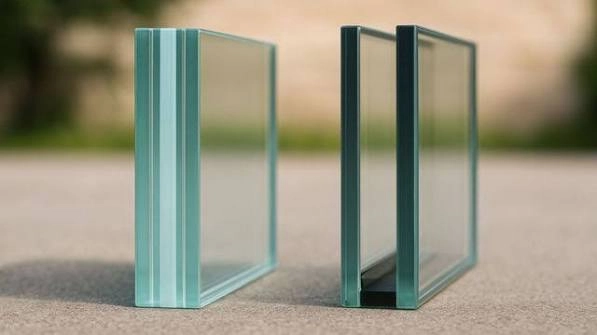
For traffic noise, rising cooling costs and impact safety/fragment retention, laminated Safety Glass is the stronger solution. For thermal insulation and condensation control, double glazing is the preferred solution. However, the best solution is very often a combined unit comprising one outer laminated pane, a sealed intermediate cavity and a Low-E pane on the inner side.
That build-up suits bedrooms beside bus routes, hotels near airport roads, and sun-facing offices. Sound, heat, seals, weight, and breakage must be judged as one system.
How Do the Two Glass Systems Work?
Laminated glass bonds several layers together. Double glazing separates two panes with a sealed cavity. Since they solve different problems, they can also work together.
Laminated Structure and Sound Damping
Laminated glass uses two or more panes bonded with PVB, SGP, or EVA. The interlayer holds fragments and reduces pane vibration. PVB is common for safety, UV control, and low-frequency noise. SGP suits higher structural demands, while EVA fits some curved or decorative work.
GLASVUE’s laminated glass can use clear, ultra-clear, tinted, patterned, printed, reflective, or Low-E glass. Double, triple, and quadruple laminated structures are available.
Sealed Cavity and Heat Control
Double glazing uses a spacer and a sealed air or gas cavity. It slows heat transfer, keeps the room-side pane warmer in cold weather, and can reduce interior condensation.
The cavity itself does not make every double-glazed window highly soundproof. Pane thickness, cavity width, frame construction, and installation quality still affect the result.
Combined Laminated Insulated Glass
A laminated insulated unit places laminated glass on one side of the cavity. The interlayer handles noise and safety, while the cavity and Low-E coating handle more of the thermal work.
| Comparison Point | Laminated Glass | Double Glazing |
| Main Strength | Safety and vibration damping | Thermal insulation |
| Traffic Noise | Strong for targeted frequencies | Depends on pane and cavity design |
| Breakage | Fragments stay bonded | Depends on pane type |
| UV Control | PVB can absorb up to 99% | Depends on glass and coating |
| Condensation Control | Limited when used alone | Better room-side surface temperature |
These figures and behaviors follow the published product information.
How Does Laminated Safety Glass Control Traffic Noise?
Traffic noise spans many frequencies. Engines and tire rumble sit lower, while horns and braking sounds sit higher. One test number cannot describe the whole problem.
Low-Frequency Road Rumble
The interlayer in Laminated Safety Glass absorbs pane vibration, making it useful near busy roads. Extra thickness can help, but mass alone does not solve every frequency.
A roadside hotel room, for example, may receive steady engine noise throughout the night. The damping layer can reduce the glass vibration caused by that low-frequency sound. This is different from simply adding another plain pane.
Asymmetric Pane Thickness
Two identical panes can react at similar frequencies. Different thicknesses spread their resonance points. A useful build-up may pair a laminated outer pane with a cavity and a monolithic inner pane of another thickness.
A six-meter facade panel still needs different checks from a bedroom window. Panel dimensions, wind load, support conditions, and finished weight all affect the final glass configuration.
Frame Seals and Air Leakage
Sound passes through sash gaps, drainage openings, worn gaskets, and unfinished joints. Even excellent glass performs poorly when the frame leaks air.
You should therefore review the full opening rather than the glass label alone. Frames, walls, roofs, floors, and air gaps also affect sound transmission.
Which Option Gives Better Energy Efficiency?
Double glazing usually wins on heat control because it includes a sealed cavity. Laminated glass alone has no similar insulating gap, although Low-E coatings can improve radiant and solar performance.
Cavity Performance
The cavity slows conduction and convection. It limits heat loss in winter and heat gain in summer. Dry gas, desiccant, spacers, and edge seals protect it from moisture.
Cavity width also matters. A very narrow space offers limited thermal resistance. Making the cavity wider indefinitely does not always help because stronger gas circulation can increase heat transfer.
Low-E Coating Choices
Low-E coatings reduce radiant heat transfer. Single-silver suits strong daylight with moderate solar control. Double- and triple-silver options can lower solar gain further while keeping useful visible light.
For year-round comfort, Laminated Safety Glass can be combined with a Low-E pane inside an insulated unit. GLASVUE lists single-, double-, and triple-silver choices for its laminated range.
U-Value and SHGC
U-value shows how readily heat passes through the glazing system. A lower figure means less heat transfer under the stated test conditions. SHGC shows how much solar heat enters through the glass.
Compare these figures only when the glass build-up, coating surface, gas fill, frame condition, and test method are stated. A low U-value taken from one configuration cannot be applied to another unit with different panes or cavity dimensions.
What Else Should You Check before Buying?
Safety, fading, weight, and maintenance often decide the final order.
Post-Breakage Retention
When laminated glass breaks, the interlayer holds the fragments. This helps in doors, full-height windows, overhead glazing, and public areas.
The remaining capacity after breakage depends on pane treatment, interlayer, supports, temperature, and load. SGP may suit projects with higher structural requirements, while PVB remains a practical choice for common acoustic and safety applications.
UV Protection and Interior Fading
PVB can absorb up to 99% of ultraviolet radiation, helping protect flooring, fabrics, and displays. Visible light, heat, dyes, and material quality still affect fading.
A retail facade may place UV control and visual clarity first. A roadside bedroom may place low-frequency noise first. The openings could have the same dimensions but still need different glass.
Weight, Cost, and Service Life
Combining laminated and insulated glass raises frame and hardware demands, so finished weight should be checked early.
Price varies with thickness, interlayer, coating, holes, edge work, shape, testing, packing, and volume. Ask for a complete build-up, not a bare square-meter price. The cheapest quote may exclude a coating, thicker interlayer, heat treatment, or complex edge processing.
Which Configuration Fits Your Project?
These directions are a starting point. Final selection should follow local rules, structural calculations, and project targets.
| Project Concern | Practical Glass Direction |
| Busy-road bedroom | PVB laminated pane with airtight framing |
| Noise plus heat loss | Laminated insulated unit with Low-E |
| Large commercial facade | Project-specific laminated insulated glass |
| Full-height safety glazing | Laminated glass with suitable heat treatment |
| High structural demand | SGP laminated configuration |
| Curved interior feature | Project-specific EVA lamination |
Homes and Hotels near Busy Roads
Start with the source and the room. Heavy trucks differ from horns and voices. Laminated Safety Glass is a strong starting point, but frame leakage can cancel much of the benefit.
Bedrooms also require more careful night-time noise control than corridors, stairwells, or service areas. This is why one glass specification may not suit every window in the same building.
Offices and Public Buildings
Large facades add solar gain, deflection, edge-seal, visual, and replacement concerns. A Low-E laminated insulated unit can combine key functions, but pane size and supports must be reviewed together.
Schools, transport buildings, offices, and hotels may also need safety glass around doors, low-level openings, busy circulation areas, and overhead sections.
Combined Acoustic and Thermal Targets
Give the supplier your acoustic target, U-value, SHGC, dimensions, coating appearance, frame type, and exposure. This avoids ordering “double glazing” without defining its make-up.
The phrase double glazing only describes the presence of two panes and a cavity. It does not tell you the pane thicknesses, interlayer, coating, gas, spacer, or expected acoustic result.
Why Choose GLASVUE for Custom Laminated Glass?
A capable processor should turn project targets into a buildable glass schedule and keep it consistent through production.
Project-Specific Glass Build-Ups
GLASVUE focuses on custom architectural glass rather than standard panes alone. Its company background reflects 29 years of industry experience. Substrates, interlayers, Low-E coatings, tempering, printing, and multi-layer structures can be reviewed within one project. This matters because acoustic targets, thermal targets, edge work, size, and frame limits are closely linked.
Production Scale and Quality Control
Its production capabilities cover laminated and insulated panels up to 6,000 × 3,300 mm, with an 85% plant automation rate. The factory combines cleaning, laminating, autoclave processing, insulating, tempering, and digital printing lines.
Drawings and Project Quotes
Send panel sizes, drawings, target figures, glass appearance, quantity, and installation conditions through the contact page. PDF and DWG uploads are accepted for technical review before pricing.
Laminated Safety Glass is generally better than double glazing when you need to reduce traffic noise, or provide safety, block UV rays or hold fragments together. Thermal insulation or preventing condensation can best be solved by using double glazing. But when you need both, laminated insulated units can be specified, with the required thickness of the individual panes, the cavity, Low-E-coating, frame and seals.
Frequently Asked Questions
Q: Is Laminated Safety Glass better than double glazing for road noise?
A: It is often better for targeted low- and mid-frequency traffic noise because the interlayer damps pane vibration. A laminated insulated unit may be better when you also need thermal insulation.
Q: Can laminated glass be used inside double glazing?
A: Yes. One side of the insulated unit can be laminated, while the cavity and Low-E pane handle more of the heat-control work.
Q: What information is needed for a glass quote?
A: Provide sizes, quantity, drawings, acoustic and thermal targets, safety needs, coating preference, edge work, holes, shapes, frame type, and installation environment.