
In the modern architectural glass industry, there exists a widespread and deeply ingrained “prejudice”: Offline Low-E glass is frequently characterized as the high-end material representing the future of green building, while Online Low-E is often dismissed as a secondary, budget-friendly alternative for those willing to compromise on quality. This binary view of “premium versus economy” simplifies a complex technological landscape and ignores the practical realities of construction and long-term maintenance.
However, as a veteran architectural glass supplier with years of experience on the front lines of manufacturing and site delivery, we frequently observe a recurring irony. Projects that chase extreme, theoretical performance parameters during the design phase often encounter severe logistical nightmares during the execution phase. We have seen massive developments face agonizing construction delays because of the difficulties in replacing broken panes (known as “replacement glass” or “supplementary pieces”). We have also witnessed significant financial losses for contractors who, due to negligence in the processing or storage stages, allowed the delicate metallic layers of offline glass to oxidize, rendering them useless.
The core argument of this analysis is simple yet vital: there is no such thing as an “absolutely superior” glass solution. Instead, there is only the optimal solution that is most closely aligned with the specific climate of the site, the project budget, the local processing capabilities, and the strict requirements of the construction schedule.
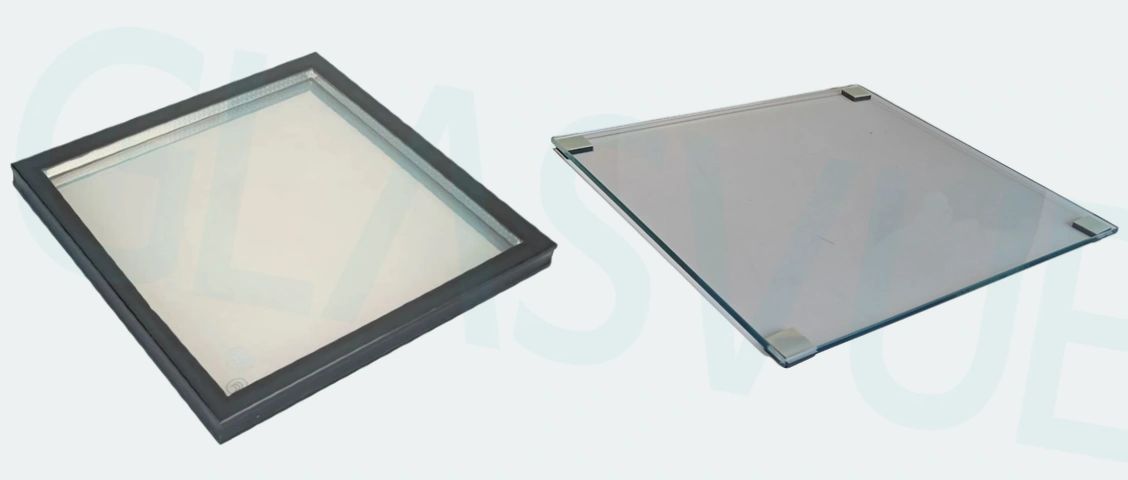
Technical Foundations: Why Manufacturing Processes Define “Character”
To truly understand why these two types of glass perform so differently in the field, one must first understand the fundamental engineering of how they are “created”. The chemical and physical nature of the coating is a direct result of the environment in which it was born.
Online Low-E: Resilience Born in the Furnace
Online Low-E glass is manufactured using a process known as Chemical Vapor Deposition (CVD). This occurs directly on the float glass production line. As the molten glass ribbon moves through the line at temperatures reaching nearly 1,000°C, a gas-phase chemical reaction is triggered. Because the glass is still in a semi-molten or highly reactive state, the functional coating essentially fuses with the glass surface at an atomic level, creating a single, integrated material.
Exceptional Durability: Because the coating is chemically bonded to the substrate, it possesses a hardness and chemical stability that is nearly identical to that of ordinary float glass. It is often referred to as “Hard Coat” Low-E.
Logistical Freedom: This resilience means the glass is largely immune to the common enemies of construction materials: acid and alkali corrosion, as well as humidity. Online Low-E can be stored in crates for extended periods and can survive the rigors of long-distance transoceanic shipping without specialized climate-controlled containers.
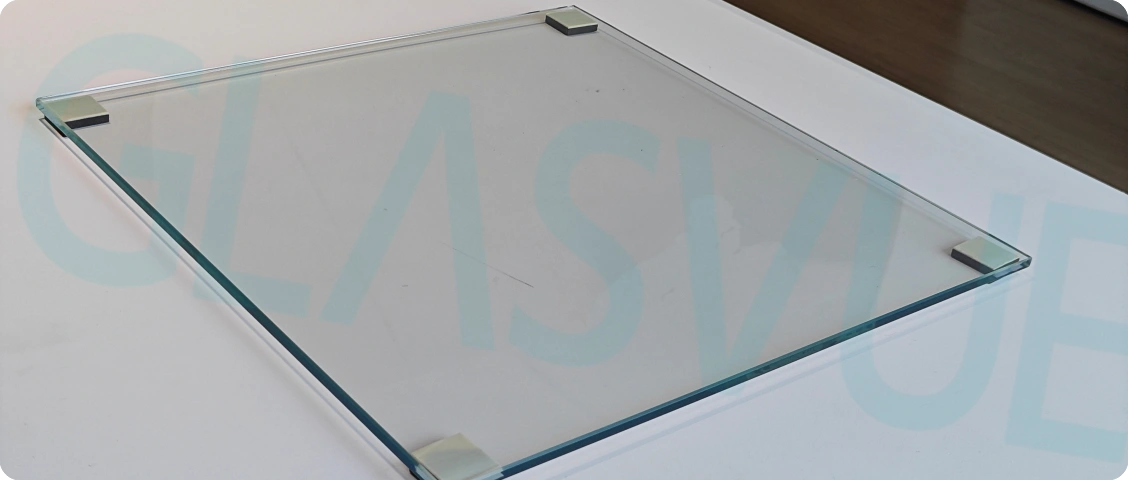
Offline Low-E: Precision Artistry within Vacuum Chambers
In contrast, Offline Low-E is produced through Vacuum Magnetron Sputter Deposition (MSVD). This process happens long after the glass has cooled and been cut. The cold glass is placed into a series of massive vacuum chambers where multiple layers of metal—most importantly, pure silver—and various dielectrics are deposited onto the surface.
Delicate Composition: While highly effective, these metallic layers are fundamentally “precious”. Because silver is a highly active element, it will begin to oxidize and degrade almost immediately upon exposure to the moisture and pollutants in the open air.
Mandatory Fabrication Requirements: To prevent this degradation, Offline Low-E glass must be processed into an Insulating Glass Unit (IGU) within a very narrow window of time after it is manufactured. Once sealed within the IGU, the coating is protected by a layer of inert gas (such as argon), which acts as a shield against the atmosphere.
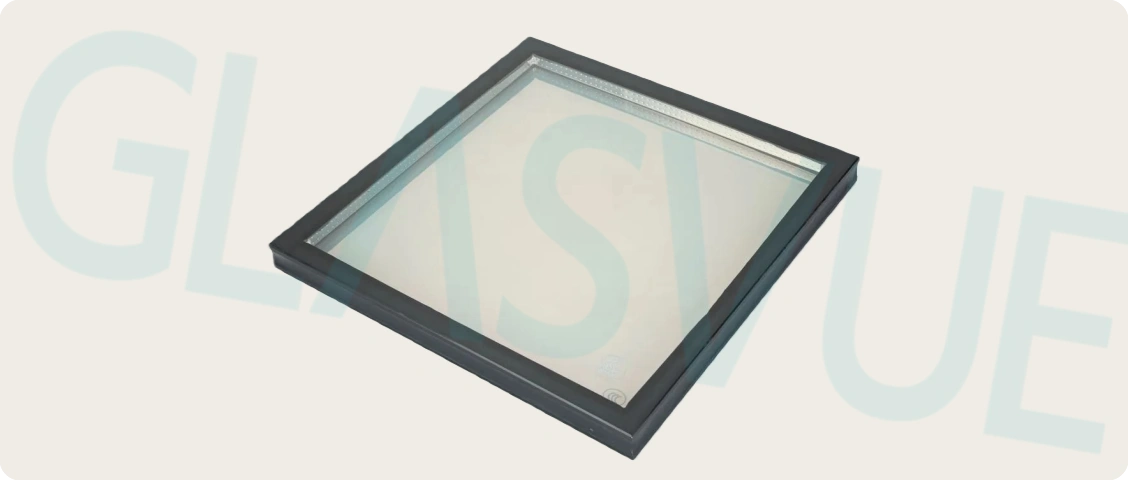
Performance Benchmarking: Does Offline Really “Outperform” Online?
Thermal Performance: The Offline “Killer Feature”
When it comes to raw thermal data—specifically the U-value (the rate of heat transfer) and the SHGC (Solar Heat Gain Coefficient)—Offline Low-E glass maintains an undisputed lead.
The vacuum sputtering process allows for much more complex and precise layering than the CVD process. Engineers can create “Double Silver” or even “Triple Silver” coatings. These sophisticated stacks are designed to be “spectrally selective”: they allow high levels of visible light to pass through so the building remains bright, while simultaneously blocking the vast majority of far-infrared thermal radiation from the sun. In regions of extreme climate—whether it is the blistering heat of a desert or the sub-zero winters of high-latitude regions—the energy savings provided by Offline Low-E are not just marginal; they are immediate and substantial.
Light Transmittance and Color Expression
Beyond pure physics, there is the question of aesthetics—a primary concern for any lead architect.
Aesthetic Versatility: The offline process offers an incredibly wide palette of colors. Depending on the specific metal oxides used in the sputtering process, architects can choose from silver-grey, light blue, neutral, or even golden tones to achieve a specific visual signature for the building.
The Consistency Paradox: Online Low-E typically has a more limited color range, often leaning toward a subtle green or greyish tint. However, the Online process has a massive advantage in “batch consistency”. Because the glass is produced in a continuous, high-volume flow, the color remains remarkably stable. Even if a building requires replacement glass six months after the initial installation, the new pieces will match the old ones so perfectly that the human eye cannot detect a difference.
Deep Dive: Why Large Projects Can’t Just Look at Parameters
When dealing with large-scale, high-uniformity projects, the “theoretical performance” listed on a data sheet is only half the story. The “usability” and “processability” of the material often have a much greater impact on the project’s ultimate profitability and success.
The Hidden Costs of Processing and Logistics
One of the most significant differences lies in the fabrication requirements.
The Edge Deletion Process: Because the metallic coating of Offline Low-E is susceptible to oxidation, it must be mechanically removed from the perimeter of the glass before it is sealed into an IGU. If this “edge deletion” is not performed, the secondary sealant will not bond correctly to the glass, leading to seal failure and fogging. This step requires specialized machinery and adds another layer of complexity where human or mechanical error can lead to wasted material. Online Low-E, with its integrated hard coat, requires no edge deletion.
Storage and Timing Risks: Once a crate of Offline Low-E is opened, a metaphorical “countdown clock” begins. The glass must be fully processed within a matter of weeks. In large-scale construction, schedules are notoriously fluid. If a construction site is not ready for the glass, but the glass has already been opened or manufactured, the contractor faces a massive inventory risk.
The Efficiency of Replacements: On any major construction site, glass breakage is inevitable due to accidents, wind, or settling. If the project uses Online glass, the contractor can simply cut a replacement from stock sheets held in a local warehouse. If the project uses high-performance Offline glass, which cannot be stored as a raw sheet for long, a replacement often requires a completely new production run at the factory. This can lead to a “replacement” lead time of several weeks, during which the building remains “open” to the elements, stalling interior work.
Avoiding the “Zebra Effect”
For large-area curtain walls, visual uniformity is paramount. The “Zebra Effect” refers to the unsightly stripes or patches of different colors that appear when different batches of glass have slight variations in their coating. Because Offline glass is produced in discrete batches in a vacuum, even tiny fluctuations in the sputtering environment or the target material can lead to visible color shifts. Online glass, produced in a massive, continuous stream, offers a level of physical and visual uniformity that is almost impossible to beat for projects where a monolithic look is required.
The Glasvue Solution: Balancing Performance and Efficiency
At Glasvue, we believe in technical honesty rather than marketing hype. We do not promote a one-size-fits-all approach; we provide tailored technical support based on the reality of the project.
For Projects Prioritizing Thermal Extremes: When a project absolutely requires the highest possible insulation or solar control, we facilitate the procurement of Offline Low-E. However, we don’t just ship the glass; we coordinate the supply chain to ensure that the glass is processed into IGUs in the shortest possible time, protecting the integrity of the silver layers and ensuring the building receives the full benefit of the technology.
For Efficiency-Driven Standardization: For many large-scale door and window projects, especially those involving export where shipping times are long, we recommend a new generation of High-Performance Online Low-E. These modern hard coats have U-values that are now approaching those of standard Offline single-silver coatings. They offer the “best of both worlds”: the thermal performance of a single-silver offline glass combined with the extreme durability, ease of storage, and lack of edge-deletion requirements typical of online glass.

Real-World Application: The 80,000㎡ Challenge
To illustrate this, consider a recent international office tower project Glasvue supplied. The project featured an 80,000㎡ curtain wall. Because the project involved long-distance international shipping and a construction timeline that spanned more than a year, the risks associated with Offline glass were deemed too high by our technical team.
We proposed a strategic combination: using a high-performance Online Low-E as the base glass, combined with an additional solar-control coating. The results were definitive. The project avoided all the common pitfalls of color mismatching and replacement delays. Most importantly, the final building met all local green building energy standards while reducing the total procurement and logistics costs by 15%.
Final Thoughts
The selection of architectural glass is not a simple choice between “better” and “worse”. It is a sophisticated balancing act that weighs thermal parameters against processing costs, delivery risks, and long-term maintenance. The true value of high-end architecture is not found in a single data point on a spec sheet, but in the synergy of performance and reliability throughout the building’s entire lifecycle.
Get Your Project-Specific Solution
Are you currently planning an architectural project of over 500㎡? Do not let the complexity of glass parameters interfere with your project’s success. Contact the Glasvue technical team for professional guidance. We provide:
Complimentary thermal simulation analysis using Window 7.8 and Therm software.
A comprehensive ROI report on material selection tailored to your specific climate zone.
Competitive tiered pricing for high-volume, standardized orders.
Would you like me to prepare a detailed thermal performance comparison table for Online and Offline glass options specific to your project’s location?