For a vast number of years, the global architectural community was obsessed with a very specific, stripped-back goal: creating the “invisible” structure. Designers pushed for the highest possible levels of clarity, trying to erase the physical borders between indoor living spaces and the outside world by using ultra-clear, low-iron glazing. However, as we move deeper into this current decade, a massive shift in perspective is taking place. The time of the boring, colorless glass box is slowly ending, making way for an era that is far more expressive, full of feeling, and deeply practical.
In the current landscape, we are witnessing what many call a Renaissance of Color. Glass is no longer viewed as just an empty hole or a basic utility; it has evolved into a vibrant canvas for artistic storytelling, a specialized tool for capturing light, and a vital element for environmental sustainability. Leading this movement is GlasVue, a pioneering force in custom architectural glass options that successfully connects imaginative design dreams with the difficult realities of technical engineering.
I. Trend Insight: The Return of Color in Modern Architecture
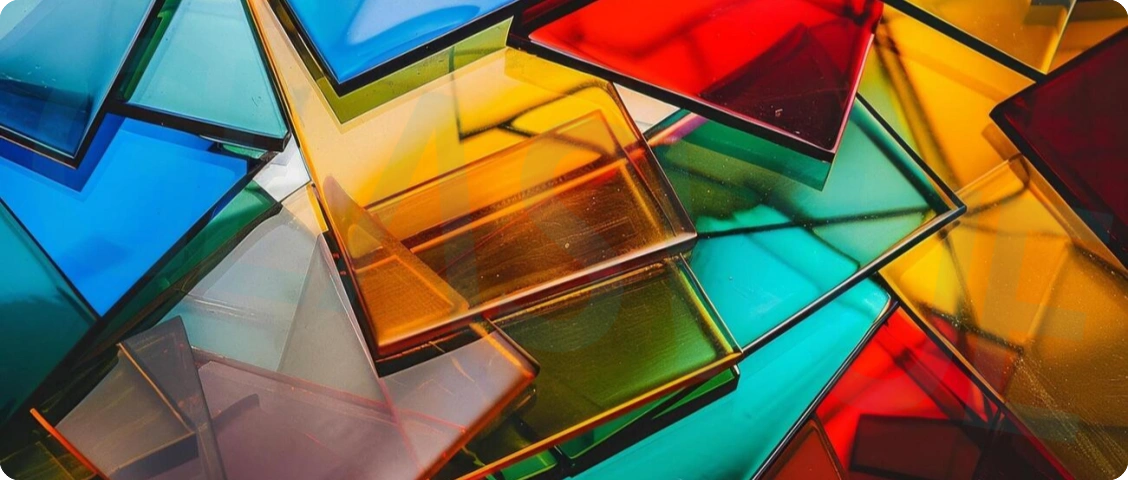
This move to go “Beyond Transparency” is being pushed forward by a mixture of artistic desires and real-world needs. As our cities get more crowded with identical steel and glass towers, the old “colorless” style has started to make everything look the same, leading to a dull architectural landscape.
- Moving Away from Repetitive Skyscrapers
Modern property developers and creative architects are now turning their backs on the “one-size-fits-all” look. There is a huge and growing hunger for personal identity and branding. Because the front of a building serves as its public face, architects are using infused colors and interesting textures to build landmarks that actually mean something to the local culture. This helps these structures pop out against a background of endless transparency.
- Emotional Impact and the Story of Light
It is a well-known fact that color has a huge effect on the human mind. While basic clear glass lets you see outside, glass that is tinted or colored acts like a filter for the world. It creates specific atmospheres—ranging from the cozy warmth of bronze-tinted rooms to the magical, ever-changing shades of dichroic or layered color sets. This allows a building to actually talk to the sun, changing its visual “mood” from the early morning light to the late evening glow.
- Blending Style with Performance
In our modern world where everyone is worried about the environment, picking a color is actually a smart performance move. It isn’t just about making things “look pretty” anymore. Glass that has been tinted or treated is a huge part of Solar Control. It helps block out a lot of the sun’s heat and stops annoying glare. This naturally helps lower the carbon footprint of the building because the air conditioning doesn’t have to work nearly as hard. It also helps with the growing need for Privacy in busy city areas without losing the great benefits of natural sun.
II. Technical Analysis: Decoding Three Core Colored Glass Technologies
Getting the exact right shade of a color requires a very deep grasp of how materials work. At GlasVue, we break down the way color is added into three main technical paths, and each one gives different benefits depending on what the architect wants to achieve.
1. Body Tinted Glass (The Foundation)
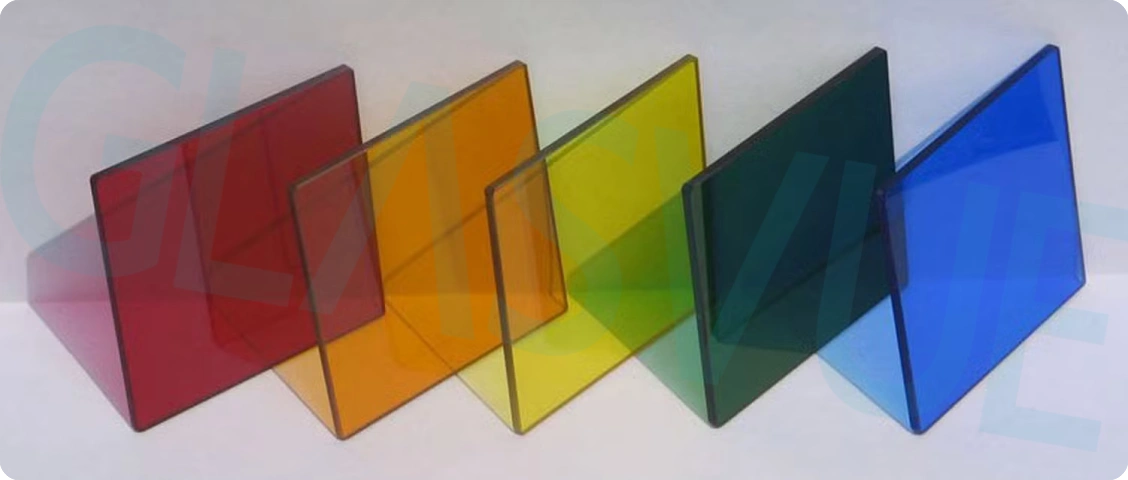
Definition: Body tinted glass is made during the initial float glass process. This is done by tossing metal oxides (like iron, cobalt, or selenium) into the giant vat of melted glass ingredients. Because of this, the color is actually part of the glass itself.
- Main Features:The color is spread perfectly throughout the entire piece of glass. Most of the time, you see tones like dark charcoal grey, warm bronze, and various shades of blue or green.
- Big Benefits:This is a very budget-friendly option and it gives great basic protection from the sun. By soaking up a huge amount of solar heat, it keeps the inside of the building feeling cool and stops people from being blinded by the sun.
- The Downsides:The choice of colors is usually stuck to a few standard options. Also, the darkness of the color depends on how thick the glass is—thick pieces look darker than thin ones. This can be a headache if a big project needs different glass thicknesses but wants the color to stay exactly the same everywhere.
2. Colored PVB Laminated Glass (The “Sandwich” Versatility)
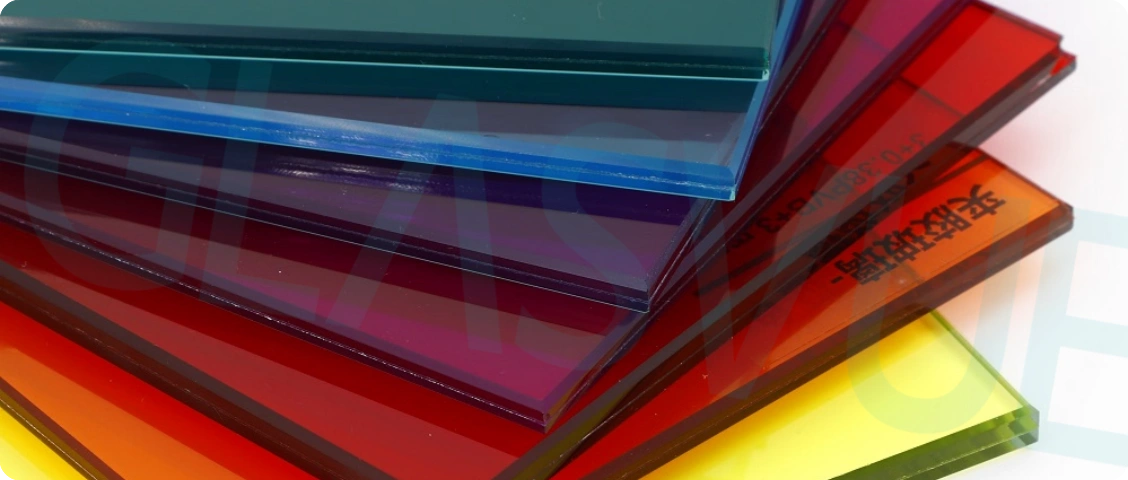
Definition: This method is like making a “sandwich” where you take one or more layers of colored Polyvinyl Butyral (PVB) or SGP plastic and squash them between two strong sheets of glass.
Main Features: Think of this as a layered structure where the “filling” in the middle provides all the beauty.
Big Benefits:
- Limitless Colors:By piling up different layers of primary-colored plastic, we can mix together more than 50,000 unique colors. This ranges from very light pastels to solid, bold colors you can’t see through.
- Extra Safety:Because it is a laminated product, it is officially safety glass. If it ever breaks, the sharp pieces stay stuck to the plastic layer instead of falling and hurting someone.
- Changing the View:We can change how “see-through” the glass is, moving from 100% clear to a foggy or frosted look.
Best Used For: Stand-out feature walls, decorative glass fins, and building fronts where a specific company brand color or high safety levels are needed.
3. Ceramic Frit and Enamel Glass (The Art of Pattern)
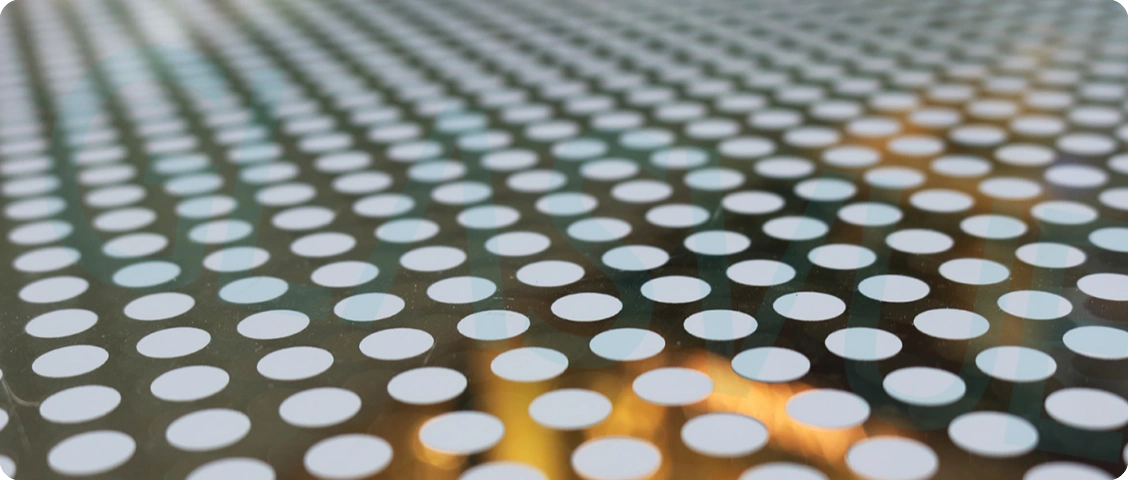
Definition: Special tough inks are put onto the glass surface using a screen or a digital printer. Then, the glass is heated up in a tempering furnace, which “bakes” the ink forever into the glass surface.
Main Features: When you touch it, the surface often has a bit of a feel or texture to it. It can be used for solid walls of color or very detailed designs.
Big Benefits:
- Complex Designs:You can do almost anything, from dots that slowly fade away to actual photos printed on the glass. Ceramic frit gives the designer total freedom.
- Functional Uses:It is often used to hide the “messy” parts of a building between floors or to create “bird-safe” glass so birds don’t accidentally fly into the windows.
- Built to Last:This color is tough. It won’t scratch, it doesn’t care about rain or chemicals, and it will never fade even if it sits in the hot sun for years.
Best Used For: High-tech building fronts, fancy office dividers, and covering up the structural beams of a tower.
III. GlasVue Solutions: Practicing Customized Aesthetics

At GlasVue, our core belief is that every single piece of glass provides a chance to do something new and exciting. We don’t just act as a middleman selling glass; we work as a dedicated partner with architects to stretch the limits of what people think is possible.
Innovation Driven by Technology
We don’t let ourselves get held back by boring, standard color lists. Our research and development teams spend their days looking at how robotic building methods and glass science can work together. This ensures that when we bring color back to buildings, it is supported by very smart and solid engineering.
Deep Customization Capabilities
- Total Project Advice:We walk architects through the tricky process of picking the right glass. We help them balance things like Visible Light Transmission (VLT), how much light bounces off (Reflectance), and the Shading Coefficient (SC). We make sure that the pretty color doesn’t ruin the building’s energy efficiency.
- High-Tech Power (Low-E Integration):One of the things GlasVue is famous for is mixing color methods (like PVB or Tinted glass) with very high-performance Low-E (Low-Emissivity) coatings. This lets a building have a bright, bold personality while still keeping the heat in or out perfectly to save on energy bills.
Application Scenarios
- Famous Landmark Buildings:We spend time creating “secret recipes” for colors on special projects that need a specific kind of shine or a shade that has literally never been seen before in the world.
- Beating Boring Designs:We provide “gradient” designs where the glass slowly changes from solid at the bottom to clear at the top. This makes a building look like it is slowly vanishing into the sky, which looks much cooler than just plain clear glass.
IV. Conclusion: The Container of Light and Color
In the modern world, glass is definitely not just “nothing.” When you put it in the hands of a creative architect who has the technical backup of GlasVue, it transforms into a vessel for light and a way to share human feelings. By carefully picking between the Body Tinted, PVB Lamination, or Ceramic Frit methods, we are able to find that perfect spot between seeing clearly and having privacy. We find the balance between saving the planet’s energy and making a huge visual splash.
The future of how we build our world isn’t just about being clear—it is about being colorful, having texture, and being very, very intentional about every choice we make.
FAQ
Q: Does picking colored or tinted glass add a huge amount of extra money to the project cost when you compare it to just using clear glass?
A: While there is definitely a higher price tag for special things like custom colored PVB or unique ceramic designs, you really have to think about the long-term value and how the building performs. Glass that is tinted can actually save you a ton of money over many years because it keeps the sun’s heat out, so your cooling bills are much lower. Also, by using the all-in-one solutions from GlasVue, we can often put safety features, color, and insulation into one single piece. This makes the building process faster and adds a level of beauty that clear glass simply cannot touch.
Q: Is it possible for me to get a very specific color for a company brand on glass without having to worry about it fading away in the sun?
A: Yes, absolutely. If you need to match a very specific color (like a Pantone or RAL shade), we usually suggest using Colored PVB Lamination or Ceramic Frit. Because the color in a PVB sandwich is protected deep inside the glass layers, and the Ceramic Frit is literally melted onto the surface at super high temperatures, these colors are incredibly stable. They won’t break down from UV rays, which means your building will look just as bright and colorful in twenty years as it did on the day it was finished.
Q: How will using tinted or colored glass change the way natural light feels inside the building? Is it going to make everything feel way too dark and gloomy?
A: This is exactly why getting professional help from experts is so important. GlasVue uses very advanced computer programs to figure out exactly how much light will come through (the VLT). we can create smart designs—like patterns that slowly fade or lighter tints—that block out the “bad” parts of the sun like heat and glare, while still letting plenty of nice, natural light into the rooms. This makes the space feel comfortable and bright without the annoying heat of the sun.
Would you like me to help you compare specific glass samples to see which color palette best matches your next architectural design?