
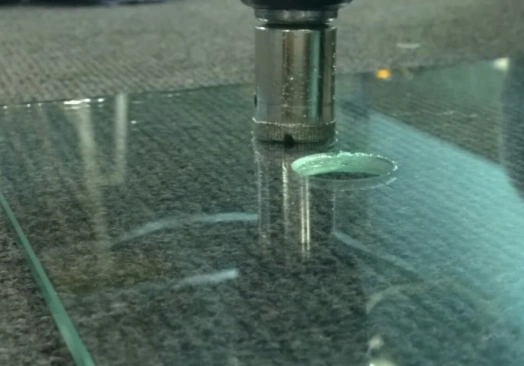
Can You Cut Tempered Glass after a door, railing panel, shower screen, or facade lite has already been tempered? In normal production, no. A finished panel cannot be safely resized, drilled, deeply ground, or notched because these operations disturb the stress pattern that gives tempered glass its strength.
GLASVUE is an architectural glass processor focused on project-specific safety and performance glass. Its company background shows long experience in custom architectural work, while its custom tempered glass service combines sizing, edge work, drilling, cutouts, surface treatment, tempering, and heat-soak testing. This matters when your panels must match hinges, clamps, channels, fittings, or curtain-wall drawings before they enter the furnace.
Can You Cut Tempered Glass after Tempering?
This question often appears after a site measurement changes or a hardware hole is missed. The rule is simple: tempered glass is a finished safety product, not a sheet that can be worked like annealed glass.
The Direct Answer
You should not cut, drill, notch, or substantially grind tempered glass after tempering. A cutter cannot create a controlled score line, and a diamond drill cannot make a stable hole through the stressed surface. The panel may break at first contact, during machining, or later in handling.
The supplied process material states that heat treatment is irreversible and that cutting, drilling, and edge work must be completed before tempering.
Cutting, Drilling, and Notching Risks
Cutting changes the panel outline. Drilling breaks through the compressed outer layer. Notching removes material near an edge, where chips and stress concentration matter most.
A missing 16 mm handle hole may look minor on a drawing. On a finished door panel, it usually means a remake, not a site repair.
Surface Work vs. Structural Fabrication
Controlled printing or coating is not the same as structural fabrication. Any process that cuts through the compression layer or creates a deep edge defect carries a high breakage risk.
Why Does Tempered Glass Shatter When Modified?
Tempering improves strength by locking opposing stresses into the glass. That makes the panel more durable in service, but it removes the freedom to machine it later.
Surface Compression and Core Tension
During thermal tempering, glass is heated to about 650°C and rapidly cooled. The surfaces cool first and form compression, while the core remains in tension. The two zones stay balanced until damage passes through the outer layer.
| Property | Annealed Glass | Tempered Glass |
| Impact resistance | Baseline | About 3–5 times higher |
| Bending strength | Baseline | About 4–5 times higher |
| Breakage form | Large, sharp fragments | Small, blunt particles |
| Cutting after final treatment | Possible | Not suitable |
The performance figures match the product data and the attached technical material.
Stress Release at Cuts and Holes
A cutter, drill, or grinding wheel starts a small crack. In tempered glass, it can enter the tensile core and spread across the panel almost instantly. The break is rarely confined to the new hole or cut line.
This explains why a hole cannot simply be added with a slower drill speed or more coolant. The problem is not only heat from the tool. It is the release of stored stress inside the glass.
Edge Damage and Panel Failure
Chips, rough grinding, and sharp internal corners create weak points. Edge finishing before tempering removes micro-cracks. Fresh damage after tempering may cause failure during transport, clamping, or thermal movement.
A panel that survives light edge grinding is not automatically safe. Hidden damage may remain near the worked area, especially if the glass later carries wind pressure, hardware loads, or temperature changes.
Which Fabrication Steps Must Be Completed before Tempering?
The safest answer to Can You Cut Tempered Glass is to settle every permanent feature while the sheet is still annealed. The drawing should confirm final size, edge finish, holes, notches, cutouts, orientation, coating side, and hardware relationship.
Precision Cutting and Sizing
Cut the glass to its final width, height, and shape before heat treatment. Include frame clearance, gaskets, setting blocks, and movement. For irregular panels, a CAD or DWG file is better than a marked-up photo.
The published production capabilities support large-format cutting and tempering within one workflow.
| Process | Maximum Size | Thickness Range |
| Cutting | 6,000 × 3,300 mm | 4–25 mm |
| Edging | 6,000 × 3,300 mm | 4–25 mm |
| Fully tempered glass | 6,000 × 3,300 mm | 4–25 mm |
| Heat-soak testing | 6,000 × 3,300 mm | 4–25 mm |
These values come from the manufacturer’s processing table.
Edge Finishing and Polishing
Edge work follows cutting and comes before washing and heating. The finish depends on whether the edge is hidden, exposed, or used near a clamp. Good grinding removes small defects and improves handling safety.
Exposed door and partition edges may require polishing for appearance. Framed facade glass may use a different edge specification, but it still needs clean, controlled processing before entering the tempering furnace.
Drilling, Notching, and Cutouts
Hinge holes, handle holes, cable openings, U-notches, and fixing points must be machined before tempering. Show the hole diameter, center position, edge distance, notch depth, corner radius, and panel orientation.
Attach the actual hardware template where possible. Similar-looking fittings may use different hole spacing. A left-hand and right-hand door can also require mirrored machining, which is easy to miss when the drawing lacks a clear room-side reference.
What Should You Do When Tempered Glass No Longer Fits?
When a finished panel is wrong, the decision should consider safety and total project cost. Can You Cut Tempered Glass to rescue the order? In most cases, replacement is the cleaner answer.
Replace the Full Panel
Replace the glass when the size, hole position, cutout, or shape is wrong. Check the revised drawing against the final frame and real hardware before production restarts. A remake costs time, but uncontrolled rework may destroy the panel or leave hidden edge damage.
For repeat orders, record why the first panel failed to fit. Common causes include outdated site dimensions, mirrored hole layouts, unapproved hardware changes, and deductions that did not include gasket or frame clearance.
Check Frame and Hardware Tolerance
Small fit problems sometimes come from the surrounding system. Check gaskets, channels, setting blocks, clamps, and approved clearance. Never force glass into a tight frame or pull it into position with screws.
Any frame or hardware adjustment must stay within the approved installation detail. Excessive point pressure near an edge, hole, or notch can break an otherwise correctly manufactured panel.
Avoid Uncontrolled Rework
Hand grinders, water jets, and glass cutters do not return tempered glass to an annealed state. Full-panel annealing requires furnace control, fresh fabrication, and another tempering cycle, so a new panel is usually more practical.
Local heating is not a safe shortcut either. A torch or concentrated heat source creates an uneven temperature field and may cause thermal breakage before any useful machining begins.
How Can You Prevent Fabrication Errors before Ordering?
The best time to ask Can You Cut Tempered Glass is before the purchase order. That question often reveals which measurements, fittings, or drawing details are still unapproved.
Final Dimensions and Drawings
Confirm width, height, thickness, quantity, shape, edge type, and orientation. Mark room side and exterior side for coatings, printing, or frit. Repeated facade panels should not be treated as identical until anchors and corner details are checked.
For shaped panels, include overall dimensions and individual segment measurements. A drawing should also identify which dimensions are critical to installation and which have an accepted tolerance.
Hole, Notch, and Hardware Details
Dimension every hole and cutout from fixed datum edges. Show diameter, slot length, corner radius, and spacing. A note that says “hole for hinge” is vague. Add the hinge code, hole center, diameter, and glass orientation.
Avoid scaling measurements from a PDF. Use written dimensions, since printers, file exports, and screen settings can alter the apparent drawing scale.
Glass Build-Up and Heat-Soak Requirements
State whether the panel is clear, low-iron, tinted, coated, printed, laminated, or part of an insulating unit. If tempered glass will form part of an insulating glass unit, the shape and fabrication must be completed before tempering and final assembly.
Heat-soak testing may be specified where replacement access is difficult or extra screening for spontaneous breakage is required. It reduces risk but does not remove every possible cause of later failure.
Start Your Custom Tempered Glass Project
A reliable order starts with a complete drawing. Send final dimensions, hole positions, notch geometry, edge finish, thickness, coating, quantity, hardware references, and delivery needs.
The online contact form accepts PDF and DWG drawings, allowing the technical team to review the proposed processing route before production. Keeping cutting, edging, drilling, washing, tempering, and optional heat-soak testing within one documented workflow also reduces handover errors.
The final answer to Can You Cut Tempered Glass after tempering remains no for normal architectural work. Accurate pre-tempering fabrication, careful drawing control, and replacement of incorrect finished panels provide the safer route.
FAQ
Q: Can You Cut Tempered Glass with a diamond blade?
A: No. A diamond blade can damage the compressed surface and release the internal tension, causing the full panel to shatter. Diamond tools are used before tempering while the glass is still annealed.
Q: Can a small hole be drilled after tempering?
A: No reliable hole size is considered safe after tempering. Even a small drill point can penetrate the compression layer. Complete all holes, slots, and cutouts before heating and quenching.
Q: What should be sent for a custom tempered glass quote?
A: Send the final size, thickness, quantity, edge finish, hole and notch drawing, coating or printing needs, hardware details, installation orientation, delivery location, and any heat-soak or certification requirement.