
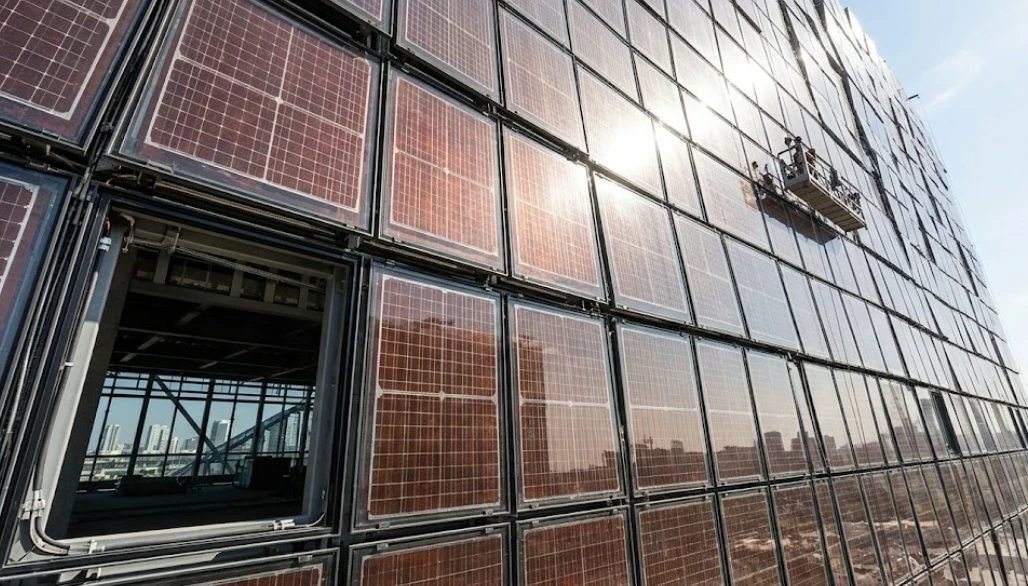
Gaze at a current city’s horizon, and it reveals far beyond mere glass and metal. It serves as a backdrop for fresh power shifts. For those in architecture or development, constructing forms has evolved. Now, it involves crafting energy hubs. Embedding Photovoltaic (PV) methods into a structure’s outer layer signals a firm turn to low-carbon goals. Key in this shift lies Perovskite PV Glass. This innovative substance combines see-through quality with effective power capture. In contrast to standard silicon sheets, such methods enable each pane to become a clean power point. At the same time, it preserves the sharp vision essential to designs.
At GLASVUE, more than twenty-five years mark our role as a chief figure in thorough glass treatment. Beyond providing glass, the role extends to serving as a vital ally. This helps convert building concepts into robust outcomes. From an intelligent production site boasting 85% machine operation, top-notch equipment from Finland’s Glaston and Germany’s Bystronic comes into play. Consequently, all items align with exacting criteria. Spanning subway networks to elite housing endeavors, the “Architect-Preferred” approach propels efforts to redefine clarity through precise analysis. Details on this path and dedication to excellence appear on the About Us page.
The Rise of BIPV in Modern Architecture
Integration of Solar Technology
Building Integrated Photovoltaics (BIPV) embodies the smooth blend of solar energy production and core elements. Opting to embed solar cells straight into the outer wall removes the call for distinct mounting frames. It also trims excess resources. Such methods transform idle faces into key players in the structure’s power equilibrium. In turn, expenses per unit area fall steadily across the edifice’s span.
Shift to Green Energy Solutions
International power guidelines steer toward requirements for “Good Houses.” These stand independent and environmentally sound. Embracing spread-out power networks cuts dependence on main lines. Moreover, it shields from varying service fees. Official programs bolster this change by advancing “PV + Architecture.” They align factory expansion with city style.
Aesthetic and Functional Balance
Conventional solar boards frequently clash with the smooth, open demands of tall urban towers. Yet, recent advances permit a balanced match. Panes retain up to 90% openness. Meanwhile, concealed chip strata quietly fuel the edifice’s air and illumination setups.
The Science Behind Perovskite PV Glass
Core Semiconductor Technology
“Perovskite” denotes a group of earthen oxides featuring a defined atom arrangement (ABO3). Within power applications, it acts as a pliable slim coating placed amid hardened layered panes. This chip approach excels in seizing light over an extensive range. It shifts light particles to charge carriers with slight power waste.
High Light Transmittance
A standout trait of Perovskite PV Glass involves its capacity to stay transparent. Employing a PET blend for light capture along borders and a clear PVB layer at the core minimizes effects on daylight. In a routine pane, the capture setup touches roughly 9.8% of the seen space. Hence, inner areas stay luminous and appealing.
Advanced Production Capabilities
Steadiness in these advanced walls hinges on accurate fabrication. The Production Capabilities include complete machine paths for slicing, bordering, and strengthening. They secure the perovskite coating firmly inside the pane assembly. The method assures safeguards for circuit parts against dampness and outer wear over long periods.
Key Benefits of Perovskite Facades
Excellent Thermal Insulation
Fitting this pane yields power and additional gains. The layered form offers a notable boost to the structure’s heat barrier. For example, substituting a lone 6mm sheet with a perovskite layered piece lowers the heat flow rate (K-value) from 5.0 down to 2.8 W/(m²K). Structures thus maintain milder warmth in summer and better retention in winter. This lessens pressure on climate controls.
Superior Noise Reduction
In crowded city settings, sound control ranks equally with power aspects. PVB fillers in the Perovskite PV Glass excel in damping shakes. Based on setup, sound dampening (RW) reaches 35dB to 42dB. It thus curbs 50% to 70% extra clamor versus basic single sheets. In effect, it fosters serene havens for dwellers or staff.
Stable Power Generation
Dependability defines this method. Assemblies endure force up to +3000Pa and perform steadily amid elevated warmth. A straight-line power assurance for 25 years ensures the outlay yields returns well beyond first placement.
Transforming Buildings with GLASVUE Perovskite PV Glass
Residential Green Energy Solutions
Housing ventures typically target personal usage. A common dwelling with around 38.7 square meters of pane area produces up to 11.61KW current daily. Linking with intelligent storage units from allied firms supplies current for all household illumination and devices. The Sanya initiative illustrates this, as complete pane outer layers yield over 42KW each day for one family.
Commercial Office Implementations
Business areas see greater power output scope. A sizable office with 15,000 square meters of walls anticipates daily yields from 4,250KW to 5,500KW. Such amounts notably counter running expenses for broad air systems. Ningxia’s warehouse site yielded yearly current reductions in the hundreds of thousands of dollars. This confirms eco methods align with solid economic sense.
Customized Architectural Applications
No two structures match exactly, so panes ought to reflect that. Choices span targeted shade levels (10-20% for strong openness or 40-60% for enhanced chill) or pane depths such as 6+6mm or 8+8mm. Options abound. Collaboration ensures circuit paths and frame parts remain unseen. This upholds the “Architect-Preferred” style. Prepared to review particular venture details? Reach out via Contact Us.
The Future of Sustainable Urban Development
Carbon Footprint Reduction
Adopting Perovskite PV Glass yields clear and deep eco effects. Each 1,000 square meters fitted at 40-60% shade averts about 1,000 kg of CO2 releases per day. Directly, it advances ESG targets and aids eligibility for elite eco structure badges.
Smart Grid Integration
Tomorrow’s edifices will form points in an intelligent power lattice. Setups prepare for “Smart Grid Ready” status. This enables unified oversight and scattered power oversight. AI-based tools permit tracking of instant output, reserve amounts, and usage trends. Thus, each unit of power applies optimally.
Next-Generation Building Materials
Progress leads to realms where structures cease being power users and become generators. Advances in chip pane methods erase lasting divides between utility and form. In plotting forthcoming tasks, reflect on how a capable wall reshapes asset worth over five decades.
Upgrade Your Facade with GLASVUE Today
Selecting an apt ally for BIPV endeavors proves essential. Expertise at the crossroads of circuit design and building panes is vital. The Perovskite PV Glass embodies this fusion’s height. It provides a 15-year visual assurance and 25-year output pledge. Visitors are welcome to survey the complete array of offerings on the official website. Assistance stands ready to craft a transparent, serene, solar-driven tomorrow.
Frequently Asked Questions
Q: How long does it take to recover the investment cost of a perovskite facade?
A: Roof fittings often recoup pane expenses in 2.9 to 3.8 years via output alone. Complete walls, factoring rent uplift and power cuts, hold strong returns against classic options.
Q: Can Perovskite PV Glass be used in existing buildings?
A: Yes. Though suited for fresh builds, integration suits upgrades by swapping base panes with current-producing layers. Enhancements include 20-30% superior noise barrier and 10-25% better heat retention for aged frames.
Q: Does the efficiency of the glass drop in cloudy weather or North-facing sides?
A: Direct rays optimize it, yet the method responds keenly to surrounding illumination. North walls lacking straight light sustain yields at 20-40W per square meter hourly.